
Poor Indoor Air Quality? Start With These Fixes

25% off on product page · save $4.33
Poor Indoor Air Quality? Start With These Fixes
Find and remove the source
The most effective way to fix poor indoor air quality is to identify what is getting into the air and stop it at the source. Look for musty smells, visible mold, water stains, smoke, strong cleaning-product odors, or dust that quickly returns after cleaning. If a problem is worse in one room, start there.
Fix leaks and dry damp areas promptly; cleaning visible mold will not solve an ongoing moisture problem. Keep smoking and vaping outside, use household chemicals as directed, and store paints and solvents tightly closed away from living spaces. If you suspect a gas leak, leave the building and contact your gas utility or emergency services.
Ventilate when outdoor air is clean
Ventilation helps dilute pollutants that remain after you address their sources. Run a vented kitchen exhaust fan while cooking and a bathroom fan during and after showers. Check that these fans exhaust outdoors; a fan that only recirculates air will not remove moisture or cooking fumes from the home.
Opening windows may help when outdoor air is clean. Keep them closed during wildfire smoke or other periods of poor outdoor air quality. If your home has a mechanical ventilation system, maintain it according to its instructions rather than relying on occasional window opening alone.
Featured in this guide
Breathe Better Indoors, Live Better: A Practical Guide to Improving Indoor Air Quality
Filter particles and control dust
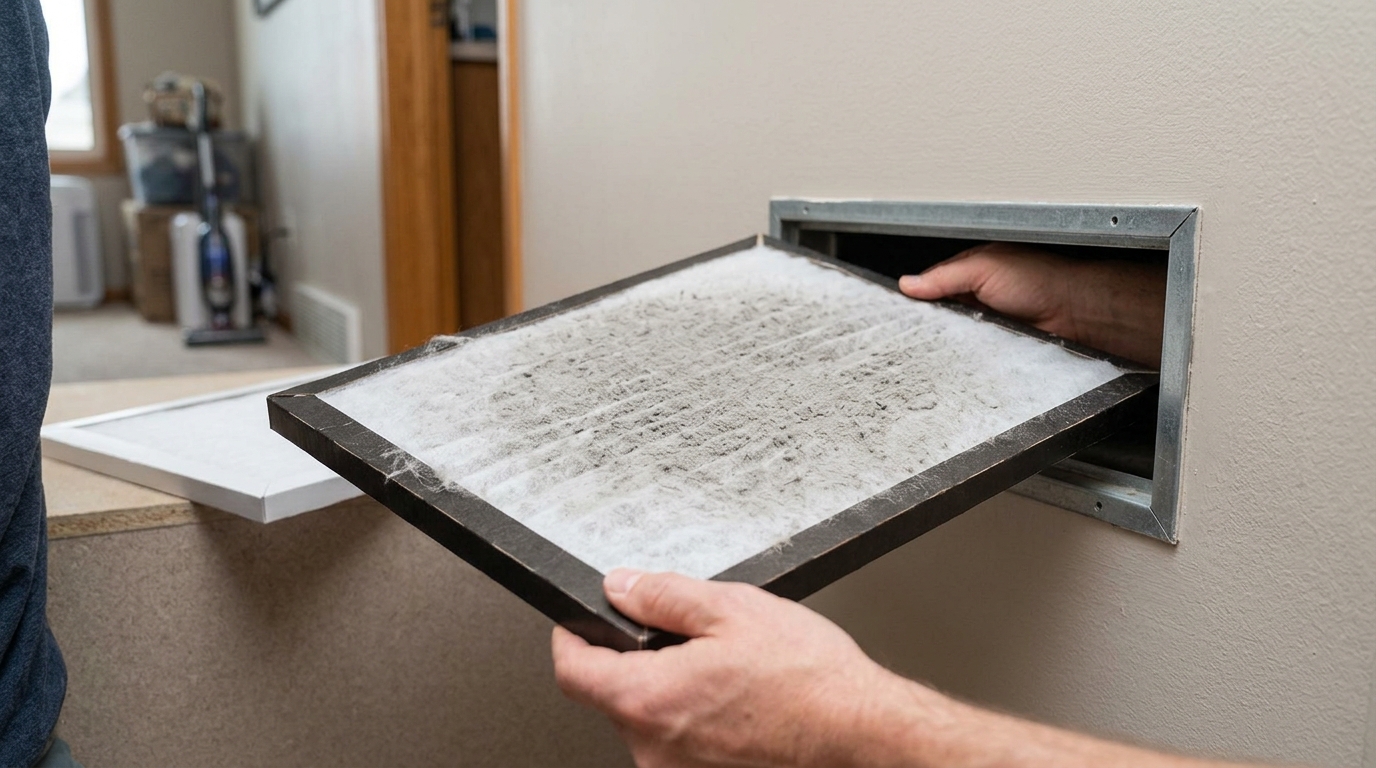
Replace HVAC filters on the schedule recommended for your system, and choose a filter your equipment can accommodate. A portable air cleaner sized for the room can reduce airborne particles, but it cannot repair a leak or remove every gas and odor. Avoid devices that intentionally produce ozone.
Vacuum regularly, dust with a damp cloth, and wash bedding if dust or pet dander is a concern. These habits work best alongside source control and ventilation, not as substitutes for them. For more context, see this practical guide to improving indoor air quality.
Check for hidden hazards
Keep working smoke and carbon monoxide alarms in the locations recommended by their manufacturers and local codes. Because radon has no smell, consider testing your home if you have never done so. A test can tell you whether mitigation is needed.
If a persistent odor, dampness, or unexplained irritation continues after basic fixes, consider a qualified indoor air quality or building professional. Describe when and where the problem occurs so they can investigate likely sources rather than relying on a single general-purpose air test.
How to use the restraint
1
Choose the restraint size for the dog and vehicle position
2
Attach the restraint to the approved vehicle anchor point
3
Check the restraint tension before the vehicle moves
4
Introduce the dog to the restraint during the poor start check
FAQ
What are signs of poor indoor air quality?
Possible signs include persistent odors, visible mold, condensation, excessive dust, or irritation that seems worse indoors. These signs do not identify a specific pollutant, so investigate the source and seek professional help if the problem persists.
See if Breathe Better Indoors, Live Better: A Practical Guide to Improving Indoor Air Quality fits your setup








Leave a comment