
Does Your Cat Get Enough Exercise? Clues to Look For
10% off on product page · save $27.22
Does Your Cat Get Enough Exercise? Clues to Look For
Watch What Happens Between Play Sessions
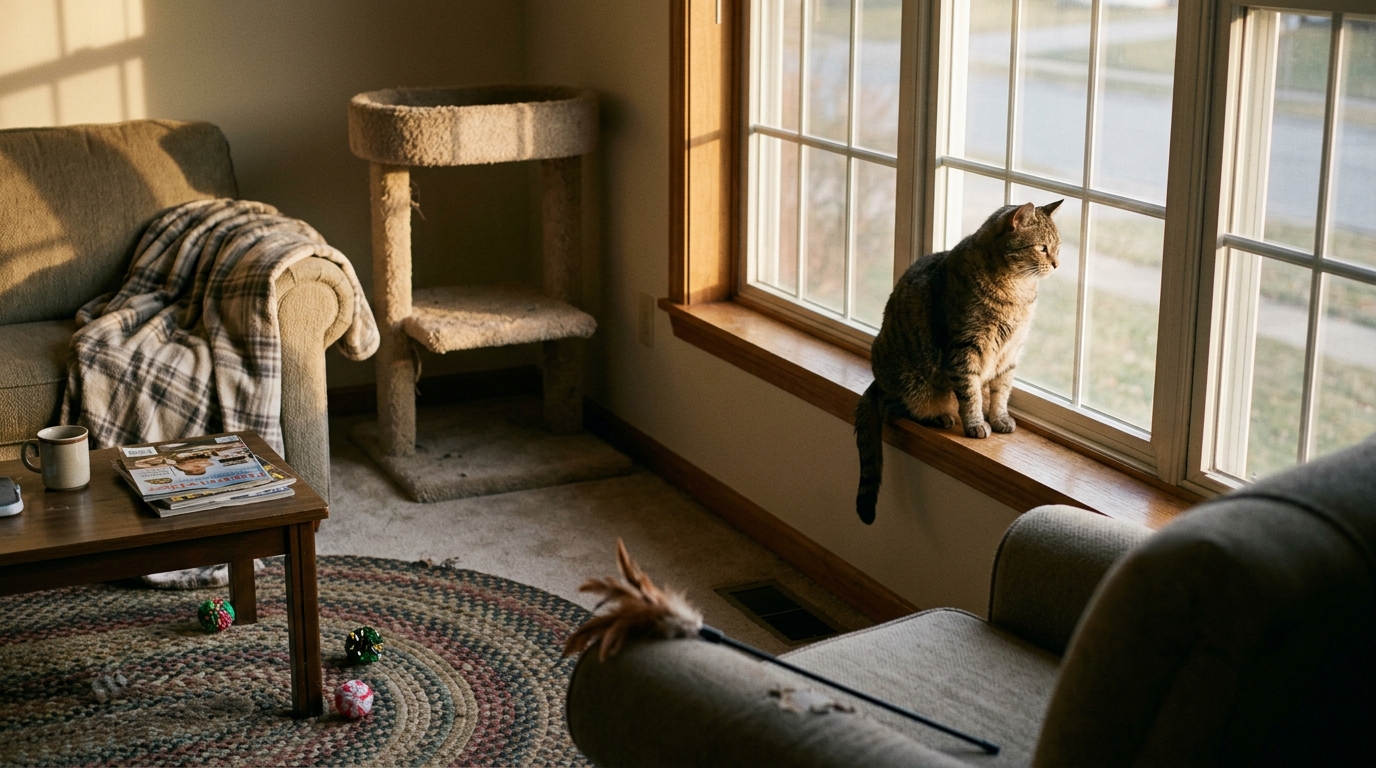
Notice whether your cat seeks out toys, explores their surroundings, climbs when they have a safe place to do so, and then rests comfortably. If they frequently pester you for play, seem restless at night, or lose interest in activities they once enjoyed, consider whether they need a different play routine or a veterinary checkup.
Use Body Condition as One Clue
Weight alone cannot tell you how active your cat is, but gradual weight gain can be a reason to review their food portions and opportunities to move. Ask your veterinarian what a healthy body condition looks like for your cat, especially if they are older, have a medical condition, or have recently gained or lost weight.
Check the listed dimensions for use body condition as one clue against the available vehicle space before use.
Featured in this guide
Cat Exercise Pack for a Vibrant, Active Lifestyle – 3-in-1 Bundle of Cat Exercise Checklists
Try Short, Repeatable Play Sessions
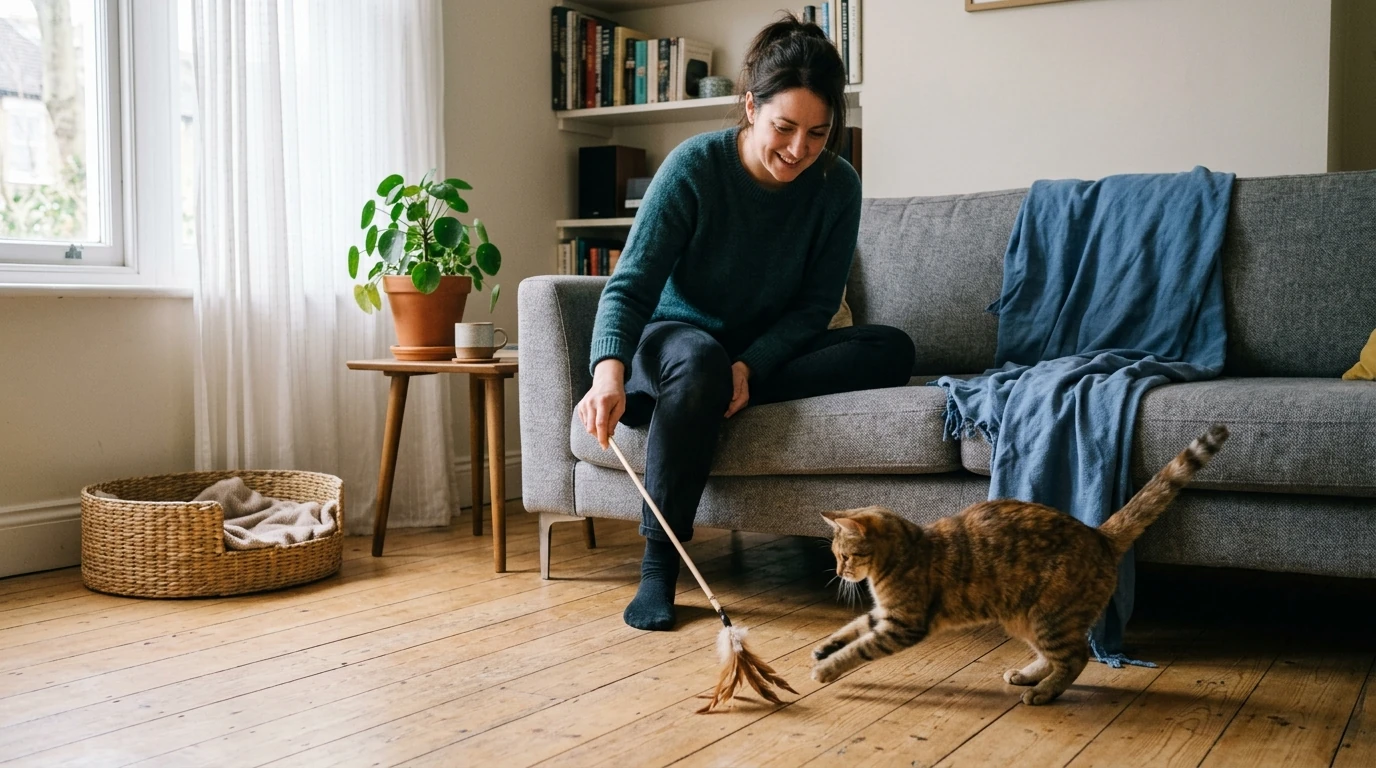
Offer a few brief sessions with a wand toy or another toy your cat likes, letting them stalk, chase, and catch it rather than waving it continuously out of reach. Start at a pace your cat chooses, keep strings and small toy parts out of reach when play ends, and adjust the session if they pant, limp, or seem distressed.
Check the listed dimensions for try short, repeatable play sessions against the available vehicle space before use.
Look for Progress That Fits Your Cat
A playful kitten and a senior cat may need very different activities, so compare your cat with their own usual energy, comfort, and recovery after play. Our team suggests noting which games hold their attention and whether they can participate comfortably; our guide to knowing if your cat is getting enough exercise offers another place to start.
Make It Easy to Keep Track
If your days are busy, a simple note about play, appetite, and behavior can help you spot changes you might otherwise miss. Our Cat Exercise Pack for a Vibrant, Active Lifestyle – 3-in-1 Bundle of Cat Exercise Checklists gives you a checklist option, but persistent changes in energy, breathing, or movement call for veterinary advice rather than more exercise.
“The checklists are so easy to use, even for a newbie like me.”
FAQ
What are the signs of a cat that needs more exercise?
Restlessness, frequent demands for play, and gradual weight gain can prompt you to review your cat’s activity, though none proves that exercise is the cause. If your cat suddenly becomes less active or avoids jumping and playing, contact your veterinarian to rule out pain or illness.
What is the 3-3-3 rule of cats?
The 3-3-3 rule is an informal guide to a newly adopted cat’s adjustment: roughly three days to decompress, three weeks to learn a routine, and three months to feel more settled. It is not an exercise target, so let a new cat build confidence and choose when to engage in play.
See if Cat Exercise Pack for a Vibrant, Active Lifestyle – 3-in-1 Bundle of Cat Exercise Checklists fits your setup








Leave a comment