
AI Pet Symptom Checkers: A Responsible Use Guide
20% off on product page · save $3.00
AI Pet Symptom Checkers: A Responsible Use Guide
What an AI Pet Symptom Checker Can and Cannot Do
A symptom checker compares owner-provided information with patterns in its available data. It may suggest possible explanations, identify warning signs, or recommend monitoring, scheduling an appointment, or seeking emergency care.
These tools are useful for recording symptoms, tracking changes, and creating a concise summary for the veterinary team. They cannot perform a physical examination, review imaging, run laboratory tests, or directly observe breathing, movement, pain, and behavior. Incomplete descriptions, breed or species differences, unusual conditions, and inaccurate data can also affect the response.
Appropriate Uses and Important Limitations
| Task | Potential benefit | Important limitation |
|---|---|---|
| Recording symptoms | Creates a clear summary | Accuracy depends on the details entered |
| Reviewing urgency | May encourage timely care | Cannot reliably rule out an emergency |
| Preparing questions | Supports a focused consultation | Does not replace clinical judgment |
| Monitoring changes | Tracks timing and severity | Worsening signs require veterinary advice |
How to Enter Symptoms Clearly and Accurately
Record when the problem began, whether it appeared suddenly or gradually, how often it occurs, and whether it is improving or worsening. Include the pet’s species, age, approximate weight, breed when relevant, sex, reproductive status, medical conditions, medications, and recent procedures.
Describe observable facts rather than assumptions. “My dog refused two meals and vomited three times in four hours” is more useful than “My dog seems sick.” Add relevant context such as dietary changes, travel, injuries, contact with other animals, altered urination, abnormal bowel movements, or possible access to medications, plants, chemicals, and other toxins.
Check every entry before submitting it. An incorrect weight, medication, duration, or frequency can substantially change the generated guidance. Keeping a dated note or video may also help the veterinarian understand intermittent symptoms.
Featured in this guide
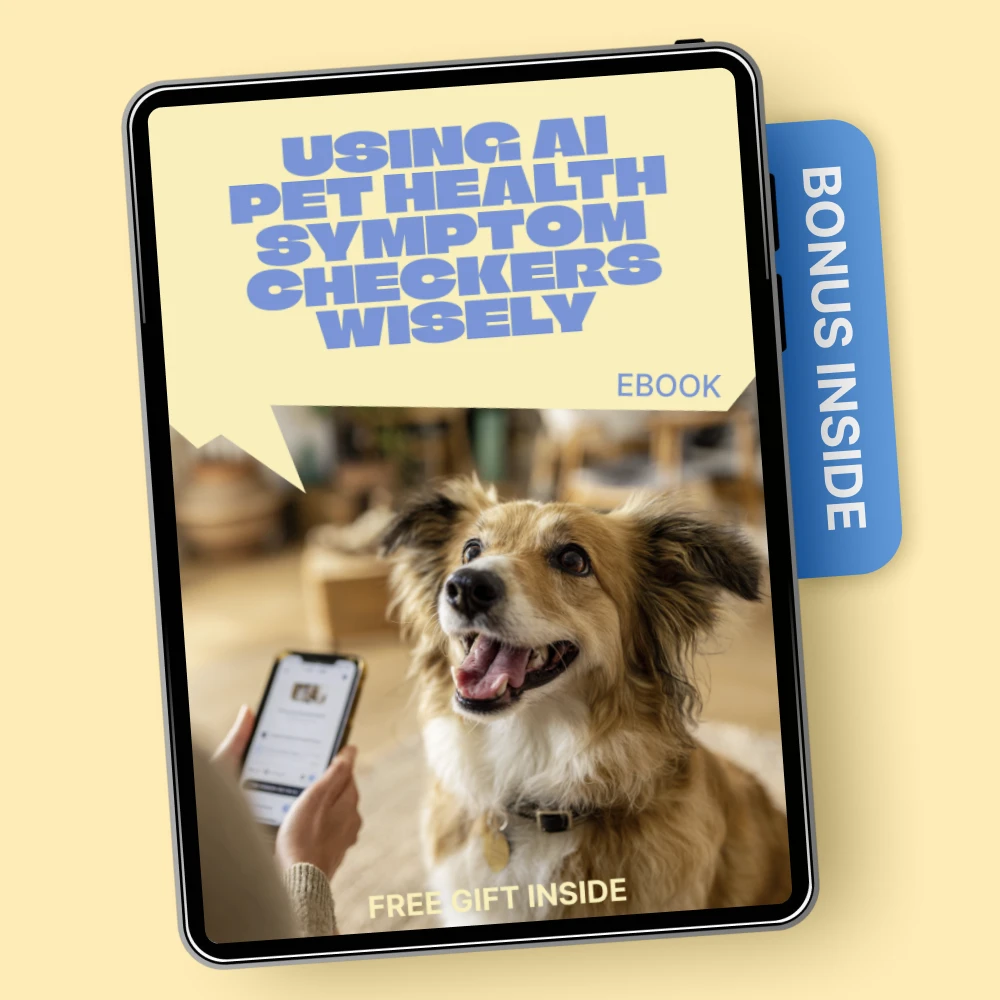
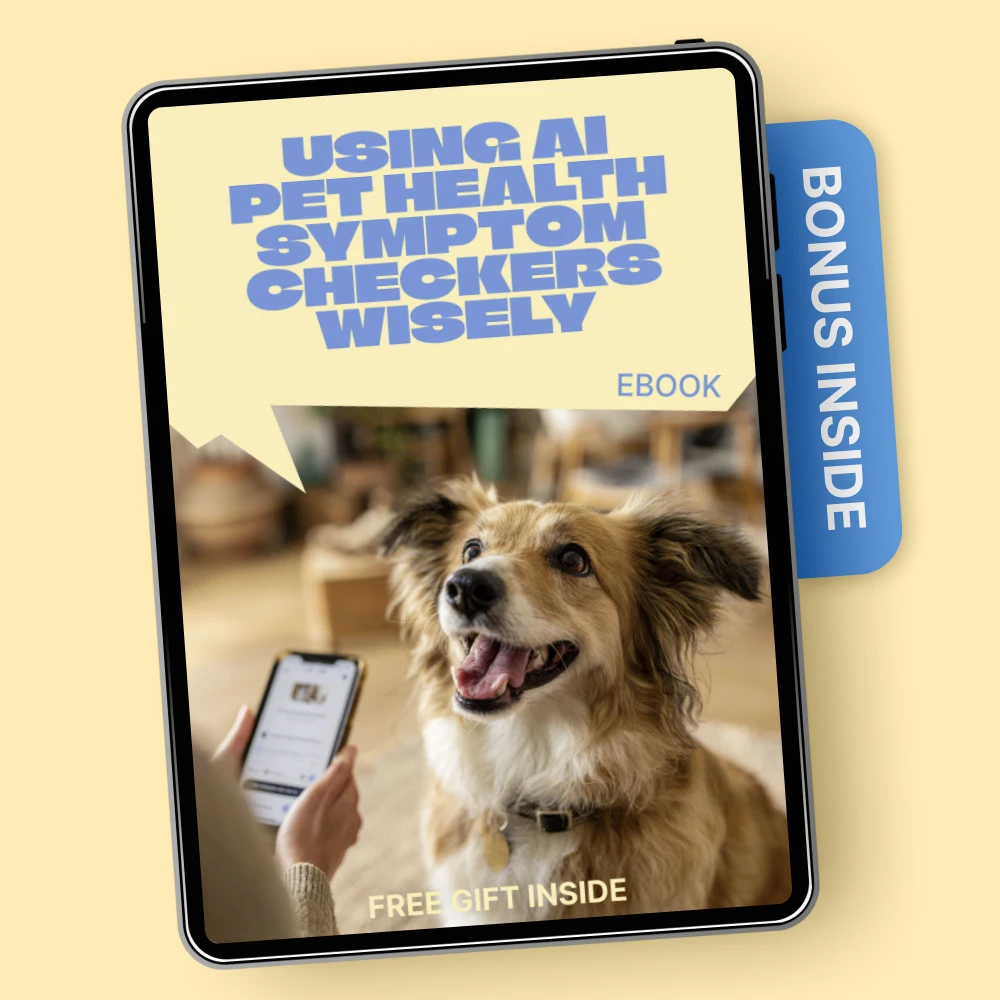
Using AI Pet Health Symptom Checkers Wisely | Smart Pet Care eBook for Owners | ai pet health symptom checker Guide
When to Skip the App and Seek Help
Contact a veterinarian or emergency clinic immediately for breathing difficulty, collapse, unresponsiveness, repeated seizures, uncontrolled bleeding, severe trauma, suspected poisoning, or a swollen abdomen accompanied by distress. Persistent retching without producing vomit, inability to urinate, blue or extremely pale gums, sudden paralysis, severe pain, and rapid deterioration can also indicate an emergency.
Do not delay care by submitting the same symptoms to multiple tools while waiting for a reassuring answer. Puppies, kittens, senior pets, pregnant animals, very small animals, and pets with chronic illnesses may deteriorate especially quickly. Call the clinic while preparing to travel so staff can offer transport or first-aid instructions. The AVMA pet first-aid resource provides additional emergency guidance.
For suspected poisoning, contact a veterinarian and consult ASPCA Animal Poison Control. Do not induce vomiting unless a qualified professional specifically directs you to do so.
Check the listed dimensions for when to skip the app and seek help against the available vehicle space before use.
Evaluating AI Results Without Overreacting
Treat possible conditions as general guidance, not a confirmed explanation. Many diseases share symptoms, so focus on the recommended level of care and listed warning signs rather than becoming alarmed by every possibility.
Compare the output with the animal in front of you. If your pet appears significantly worse than the result suggests, prioritize visible distress and contact a veterinarian. Never give human medication, change a prescription, begin a supplement, or try a home remedy solely because an automated system mentioned a condition. The FDA’s animal and veterinary consumer resources offer guidance about animal medications and product safety.
Privacy, Reliability, and Responsible Use
Before using a checker, review what data it collects, how long records are retained, whether information is shared, and how deletion requests work. Avoid providing unnecessary addresses, payment details, identity documents, or other personal information.
A responsible tool identifies its operator, explains its limitations, includes prominent emergency guidance, and offers a route to professional help. Be cautious of services that claim certainty, discourage veterinary consultation, or recommend products without disclosing commercial interests.
Build a Smarter Pet Care Routine
Digital guidance works best within a routine that includes preventive examinations, vaccinations, parasite control, suitable nutrition, exercise, dental care, and awareness of normal behavior. Establish a baseline for appetite, water intake, activity, sleep, breathing, elimination, and temperament. Keep contact information for your regular veterinarian, nearest emergency clinic, and poison-control service readily available.
A practical sequence is simple: observe specific changes, document facts, check for emergency signs, use automated guidance conservatively, and consult a veterinary professional when symptoms persist or worsen.
It is designed to support thoughtful decisions while complementing individualized veterinary advice.
Pet owners building a broader household reference library can also explore the Coolant Temperature Warning Light Explained guide, another in-stock digital resource focused on recognizing and responding to urgent warning signals.
FAQ
Which AI pet is the best?
The best option depends on the animal’s species and the owner’s needs. Favor transparent tools with strong privacy controls, clear limitations, emergency guidance, and access to veterinary support.
What is the 30% rule in AI?
There is no universally accepted “30% rule” for AI pet health checkers. Any percentage-based claim should be evaluated in context rather than treated as a recognized veterinary safety standard.
Is there a free AI pet app?
Some services provide free symptom checks or limited features, while others charge subscription or consultation fees. Compare clinical oversight, privacy practices, species coverage, limitations, and emergency guidance rather than choosing solely by price.
How to use AI to turn a pet into a human?
Generative image tools can create a fictional human-style interpretation from a pet photo and descriptive instructions. This is an entertainment use of AI and is unrelated to veterinary symptom assessment.
See if Using AI Pet Health Symptom Checkers Wisely | Smart Pet Care eBook for Owners | ai pet health symptom checker Guide fits your setup








Leave a comment