35% off on product page · save $165.84
What Can I Give My Dog for Anxiety at Home?
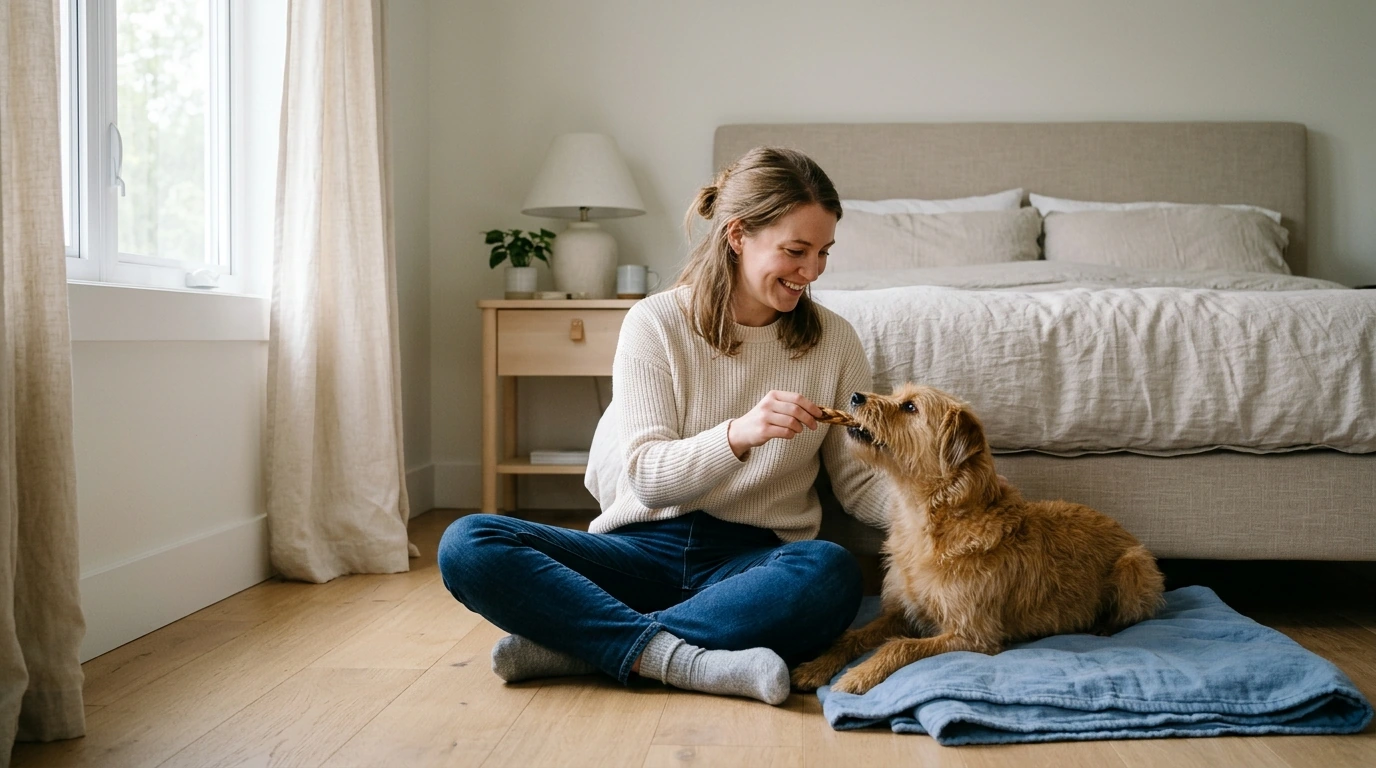
For a dog who seems anxious at home, try offering a quiet place away from visitors, loud music, or other triggers, with familiar bedding and access to water. Let your dog choose whether to use the space, and avoid forcing them into a crate or closed room if confinement makes them more distressed.
You can also offer gentle company, speak calmly, and let your dog approach you for contact rather than insisting on cuddles. A predictable routine for meals, walks, and rest can make the day feel more manageable, especially during a change in your household.
“I’m so glad I found this bundle. The AI tool for tracking my pet’s behavior changes has been incredibly useful.”
If your dog is comfortable eating, you can give them a familiar treat, a food-filled toy, or part of their regular meal as a low-pressure distraction. Choose an activity they already enjoy, supervise chewing, and stop if the item causes frustration or your dog cannot settle enough to use it.
Gentle sniffing on a walk or in the yard may also give your dog something relaxing to do, provided the setting does not expose them to the thing they fear. Reward calm behavior without scolding anxious behavior; punishment can add to your dog’s distress rather than teach them to feel safe.
Featured in this guide
The Dog Anxiety Clues Action Pack: 4-in-1 Bundle of Dog Anxiety eBooks
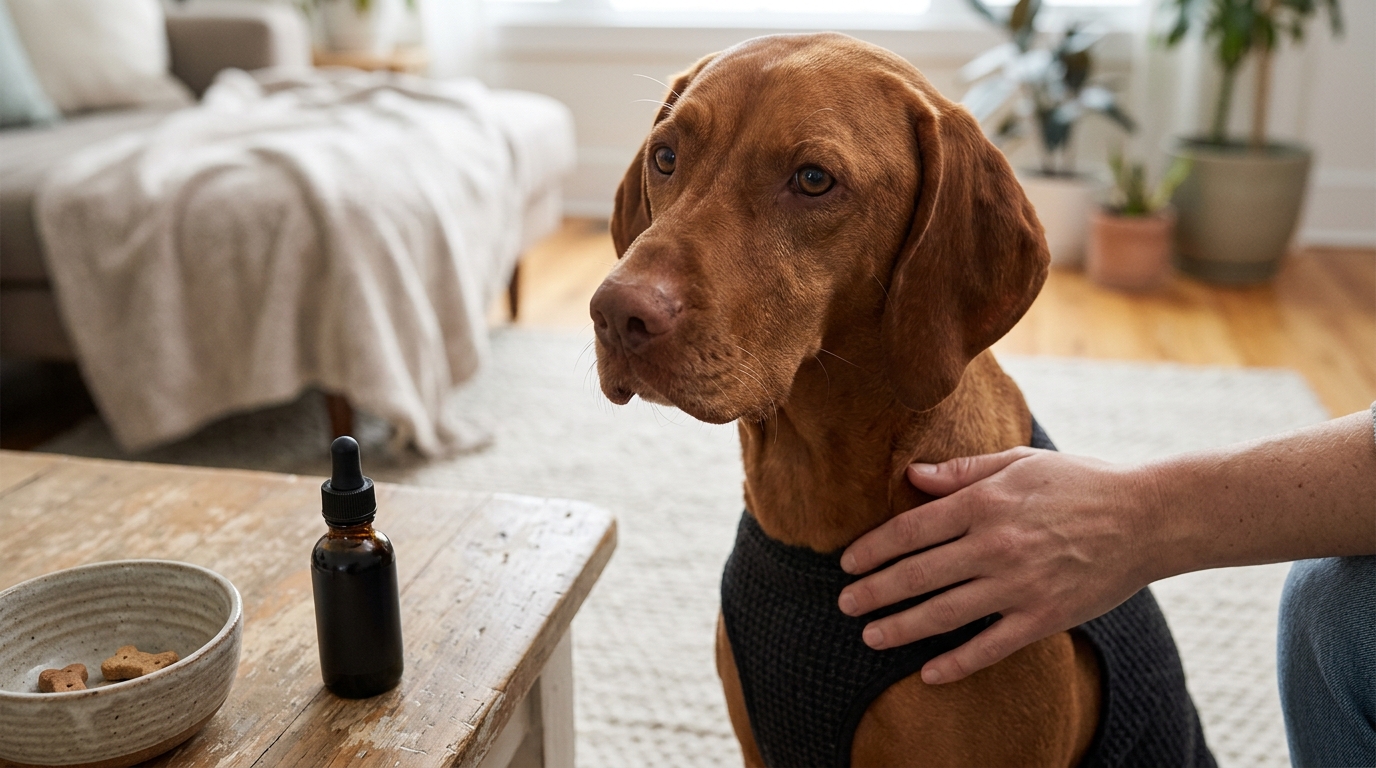
Do not give your dog human anxiety medication, sleep aids, or other medicines without veterinary direction, because the wrong substance or dose can be dangerous. Ask your veterinarian before using calming supplements, too, and tell them about any medications, health conditions, or other products your dog already takes.
If your dog’s anxiety is severe, occurs often, or interferes with eating, sleep, or normal activities, your veterinarian can help assess possible medical causes and discuss appropriate treatment. Contact a veterinarian promptly if the behavior appears suddenly or your dog may have swallowed medication; breathing difficulty, collapse, or seizures require emergency care.
Check the product’s listed specifications when evaluating be careful with medication and supplements.
Keep a simple record of what happens before your dog becomes anxious, how they behave, and what helps, whether the trigger is a thunderstorm, a visitor, or time alone. Share those notes with your veterinarian, particularly if your dog injures themselves, tries to escape, or cannot settle after the situation has passed.
Our team also offers The Dog Anxiety Clues Action Pack: 4-in-1 Bundle of Dog Anxiety eBooks if you would like to explore the topic further.
The best option depends on what is causing your dog’s anxiety and how strongly they react, so start with a safe, quiet space and a familiar activity they enjoy. If anxiety is persistent or severe, ask your veterinarian whether a behavior plan, medication, or another approach is appropriate.


Leave a comment