52% off on product page · save $88.48
What Classifies a Toy as Montessori? A Parent’s Guide

A toy is generally considered Montessori-aligned when it supports a child’s independent exploration and lets them take an active role in play, rather than simply watching a toy perform. There is no single feature that automatically earns the label: the most useful question is whether the toy gives your child a clear, manageable task they can explore at their own pace.
Simple objects that invite sorting, stacking, fitting, or practicing a movement often fit this approach because the child supplies the action and can repeat it as interest develops. A toy does not have to be advertised as Montessori to offer those opportunities, and a Montessori label alone does not tell you how well it will suit your child.
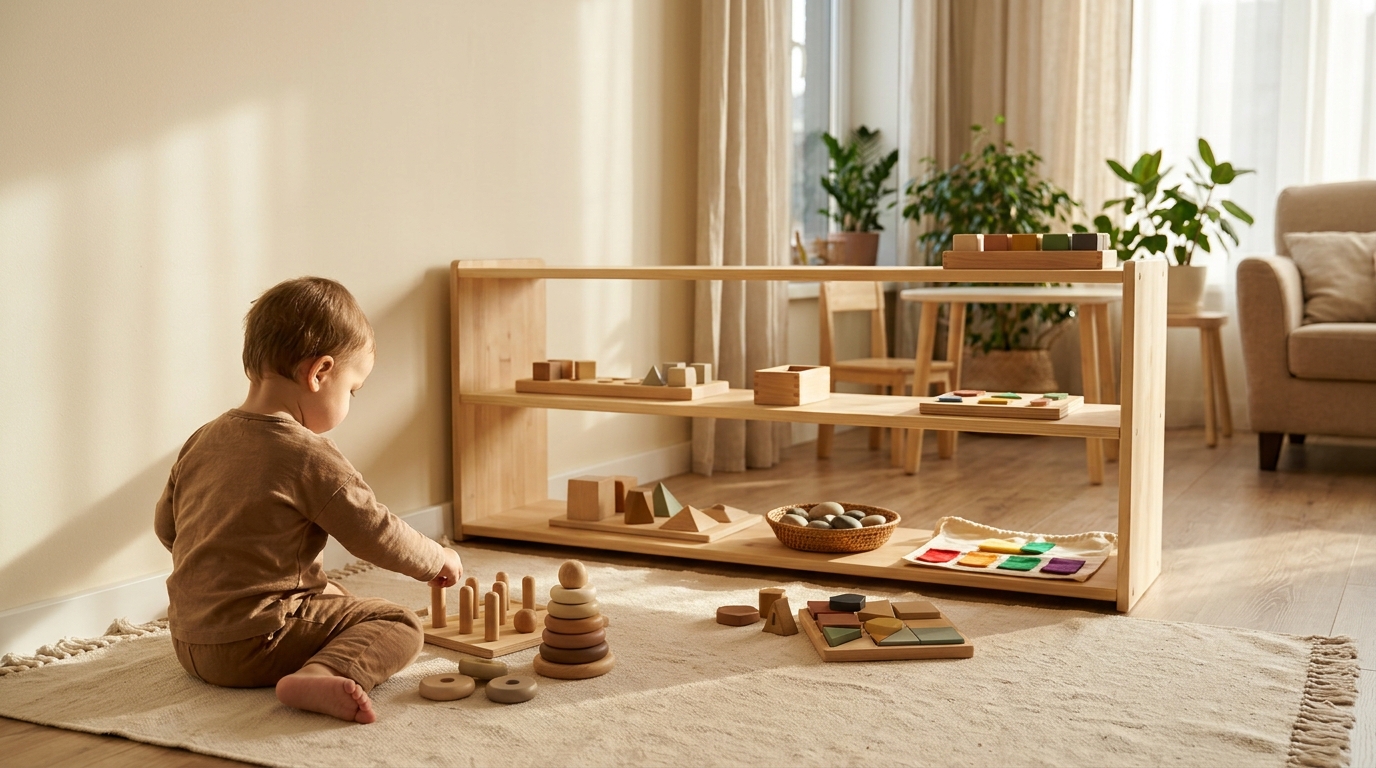
Montessori-aligned toys often focus on one idea at a time, such as placing an object into an opening or arranging pieces by size, so a child can concentrate on what they are doing. Many also offer a visible result: a piece either fits or it does not, giving the child a chance to notice the outcome and try again without an adult immediately correcting them.
When choosing a toy, consider what your child can do with it independently and whether the activity matches their current abilities. We suggest offering a simple demonstration when needed, then leaving room for your child to experiment, repeat the action, or move on when their interest changes.
Featured in this guide
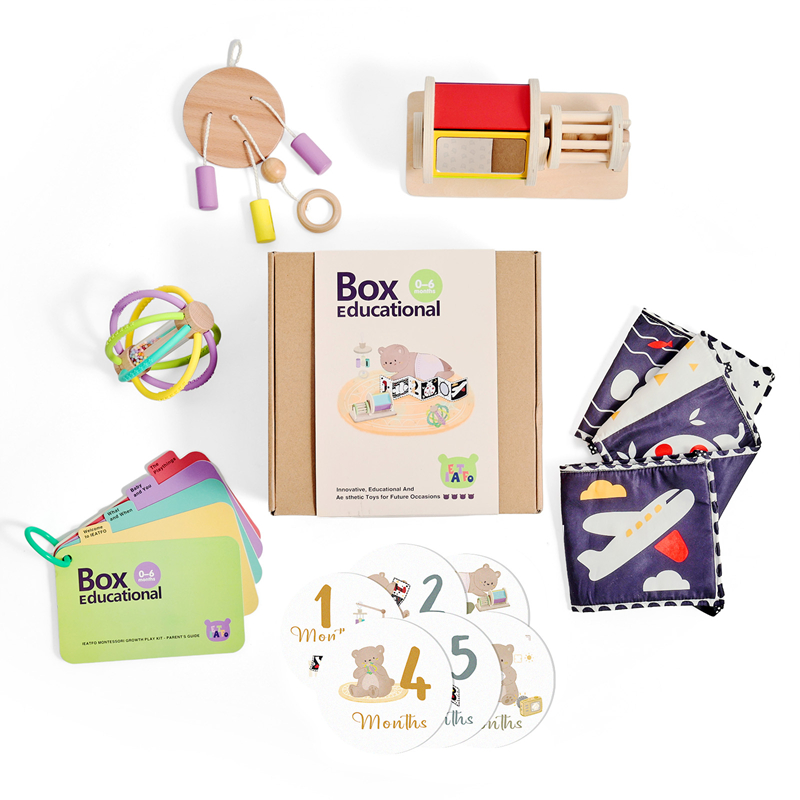
Montessori Wooden Baby Toy Set
Wood is commonly associated with Montessori toys, but material alone does not make a toy Montessori-aligned; its design and the experience it offers matter more. A simple wooden puzzle may encourage hands-on problem-solving, while a busy toy made of wood can still be difficult for a young child to use with focus.
Our Montessori Wooden Baby Toy Set is one option to explore alongside the principles in our Montessori wooden baby toy play guide. Whatever material you choose, keep toys clean according to their care instructions and remove any item that becomes damaged or develops loose parts.
A useful Montessori-aligned toy should be challenging enough to invite practice but manageable enough that your child can participate without constant help. For example, a baby who is exploring grasping needs a different activity than a toddler who is ready to sort or fit pieces together.
Choose toys intended for your child’s age, supervise play as appropriate, and keep small parts away from children who may put them in their mouths. Rather than offering everything at once, you can place a few suitable choices within reach and rotate them as your child’s interests and abilities change.
A Montessori-aligned toy invites independent, purposeful activity and gives a child room to explore or repeat a task. Simple design and an age-appropriate challenge are helpful qualities, but a label or wooden material alone is not enough.




Leave a comment