
35% off on product page · save $165.84
Human Anxiety Medications for Dogs: What to Know
Veterinarians sometimes prescribe medications such as fluoxetine, trazodone, or gabapentin for dogs, depending on whether a dog needs ongoing anxiety management or help with a particular situation. These medications are used differently and are not interchangeable; your veterinarian can decide whether one is appropriate and provide a dog-specific dose and schedule.
Even if you already have one of these medications at home, do not give your dog a tablet from your own supply or use a dose intended for another pet. Formulations, strengths, health conditions, and interactions with other drugs can all affect safety.
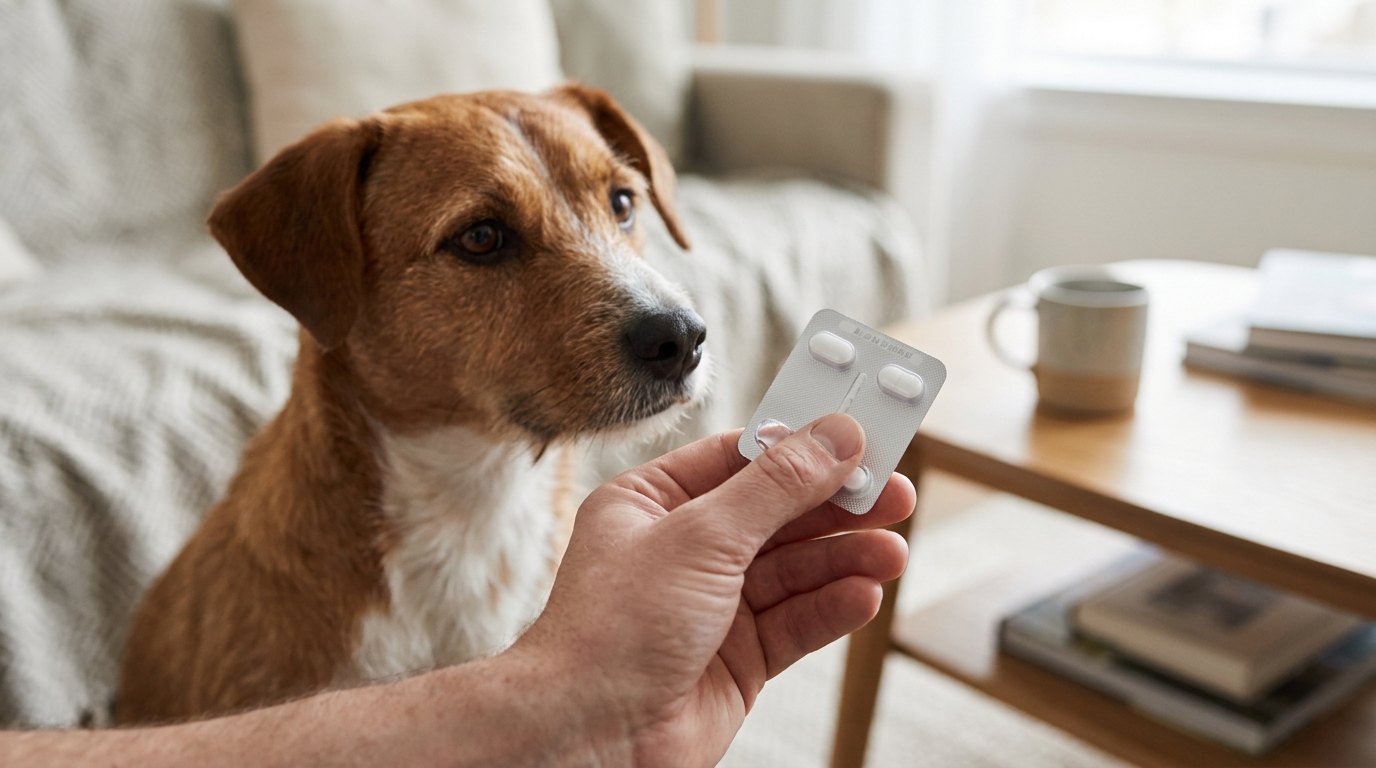
Do not assume that an over-the-counter sleep aid, antihistamine, or calming supplement is safe or effective for your dog’s anxiety. Some products contain ingredients that can be dangerous to dogs, including xylitol, which may appear in certain liquid medicines and supplements.
Diphenhydramine, often known by the brand name Benadryl, may make some dogs sleepy but is not a reliable anxiety treatment and can cause unwanted effects. Ask your veterinarian before using it or any other human product, particularly if your dog has a medical condition or takes other medication.
Check the product’s listed specifications when evaluating what about over-the-counter human products.

Featured in this guide
The Dog Anxiety Clues Action Pack: 4-in-1 Bundle of Dog Anxiety eBooks
For a dog who becomes anxious during storms, visitors, or travel, offer a quiet place to retreat and avoid forcing an interaction that increases fear. Note what happened before the behavior, how your dog responded, and how long it lasted so you can share those details with your veterinarian.
Our guide to dog anxiety clues and first steps can help you prepare for that conversation. You can also explore our The Dog Anxiety Clues Action Pack: 4-in-1 Bundle of Dog Anxiety eBooks if you would like more reading on the topic.
Contact your veterinarian, an emergency veterinary clinic, or an animal poison control service immediately, even if your dog seems normal. Have the medication container available and be ready to report your dog’s weight, the product name and strength, the possible amount swallowed, and when it happened.
Do not induce vomiting or give another medication unless a veterinary professional specifically tells you to do so. If your dog is having trouble breathing, collapsing, or having seizures, seek emergency veterinary care immediately.
Check the product’s listed specifications when evaluating if your dog has already swallowed medication.
“I’m so glad I found this bundle. The AI tool for tracking my pet’s behavior changes has been incredibly useful.”
Fluoxetine and trazodone are examples of human medications a veterinarian may prescribe for some dogs. Neither is safe to give from your own supply without veterinary instructions, because the appropriate choice and dose depend on your dog.
There is no human medication we can recommend giving your dog without veterinary guidance. While arranging advice, offer a quiet retreat and reduce exposure to the trigger when possible rather than trying an unapproved medication or supplement.



Leave a comment