
Do Indoor Cats Get Enough Exercise? Activity Guide
10% off on product page · save $27.22
Do Indoor Cats Get Enough Exercise? Activity Guide
Do indoor cats get enough exercise?
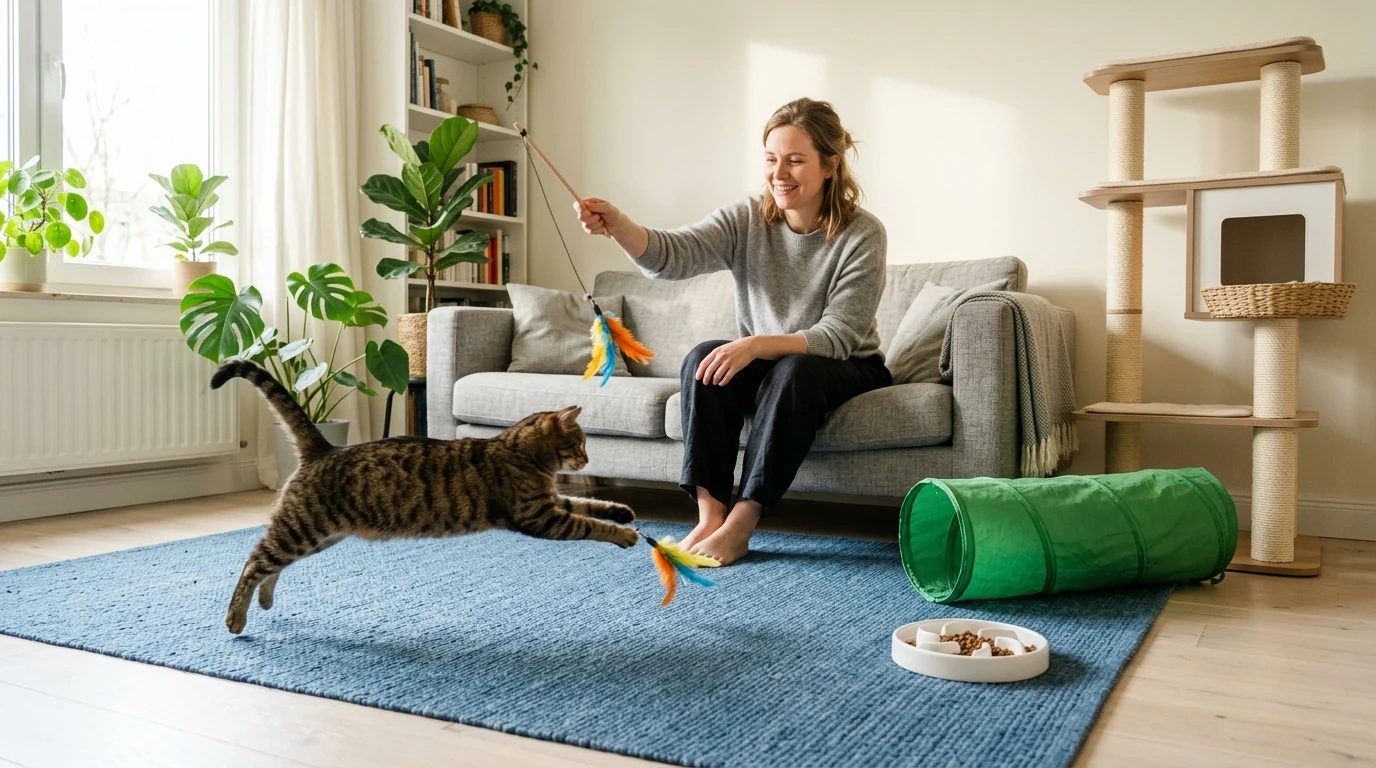
Indoor cats can get enough exercise, but their environment must encourage daily movement. Without opportunities to chase, climb, scratch, and explore, they may become inactive and gain excess weight. Most healthy adult cats benefit from at least two or three focused play sessions each day, lasting about 10 to 15 minutes each.
How Much Activity Does an Indoor Cat Need?
Exercise needs vary with age, health, weight, and personality. Kittens may play in frequent bursts throughout the day, while senior cats often prefer shorter, gentler sessions. Watch for active stalking, running, and jumping rather than counting only the minutes spent near a toy.
Schedule play around dawn and dusk, when cats are naturally more active. Begin with 10-minute sessions and adjust the length according to your cat’s energy and veterinary guidance.
Featured in this guide
Cat Exercise Pack for a Vibrant, Active Lifestyle – 3-in-1 Bundle of Cat Exercise Checklists
Turn Play Into a Hunting Routine
Interactive wand toys, rolling balls, and soft toy mice let indoor cats practice stalking and pouncing. Move toys away from your cat in quick, irregular patterns, then allow a successful “catch” before ending the game. Put string-based toys away afterward to prevent chewing or entanglement.
Rotate toys every few days rather than leaving everything accessible. This simple change can renew interest without requiring an entirely new collection.
Create More Space for Movement
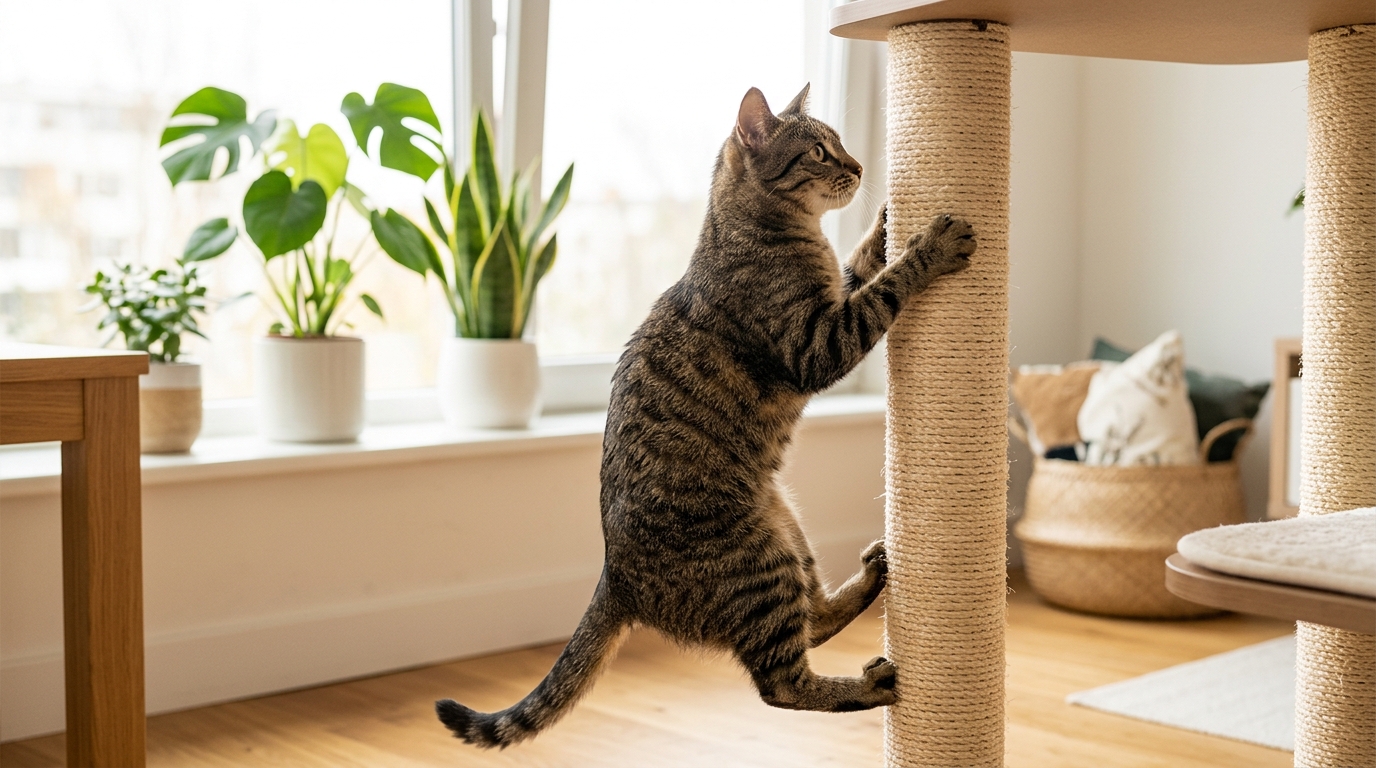
Vertical territory increases usable space and encourages climbing. A stable cat tree, window perch, or securely mounted shelf can provide exercise as well as a comfortable observation point. Check that climbing furniture does not wobble and that shelves are compatible with the wall material and rated for your cat’s weight.
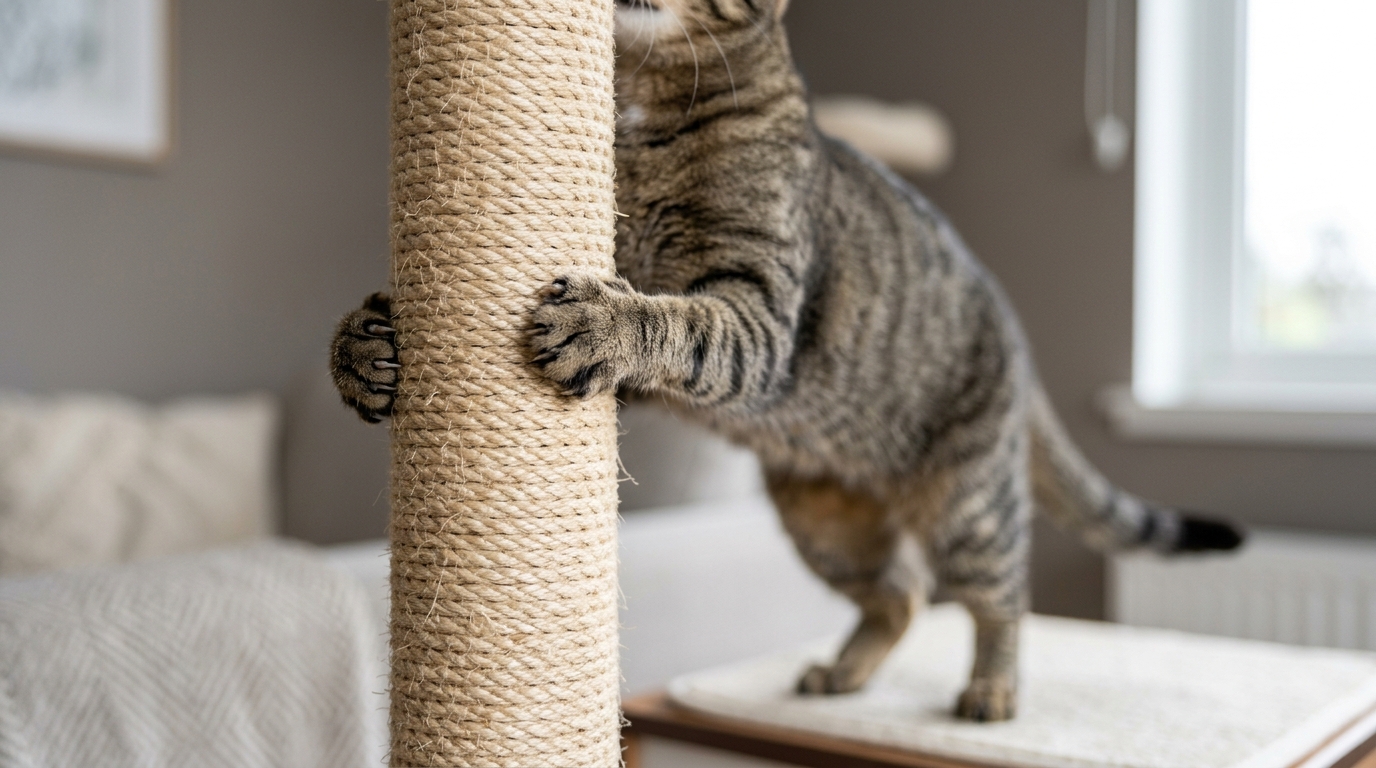
Place scratching posts near sleeping areas and common pathways. Choose a post tall enough for a full-body stretch, typically 30 inches or more for an average adult cat.
Use Food to Encourage Activity
Puzzle feeders and treat balls make cats work for part of their daily ration. Start with an easy setting so food is released readily, then increase the difficulty as your cat learns. Measure the food placed in the puzzle and subtract it from regular meals to avoid accidental overfeeding.
Learn more about activity levels and enrichment in the complete guide to exercise for indoor cats.
“The checklists are so easy to use, even for a newbie like me.”
FAQ
Is it healthy for cats to be indoor only?
It can be healthy for cats to be indoor only when they receive appropriate nutrition, exercise, veterinary care, and mental enrichment. Indoor-only cats also need climbing areas, scratching surfaces, hiding places, and daily social or interactive play.
What is the 3-3-3 rule for cats?
The 3-3-3 rule for cats is a general adjustment guideline: about three days to decompress, three weeks to learn a household routine, and three months to feel settled. Individual cats may adjust faster or slower, so provide a quiet room, predictable care, and gradual introductions without forcing interaction.
See if Cat Exercise Pack for a Vibrant, Active Lifestyle – 3-in-1 Bundle of Cat Exercise Checklists fits your setup













Leave a comment