
Does AC Help With Air Quality? What to Know

25% off on product page · save $4.33
Does AC Help With Air Quality? What to Know
Does Air Conditioning Improve Indoor Air Quality?
Air conditioning can help indoor air quality by filtering circulating air, controlling humidity, and allowing windows to remain closed during periods of outdoor pollution. However, standard AC systems do not remove every contaminant, and poorly maintained equipment may circulate dust, mold spores, or other particles.
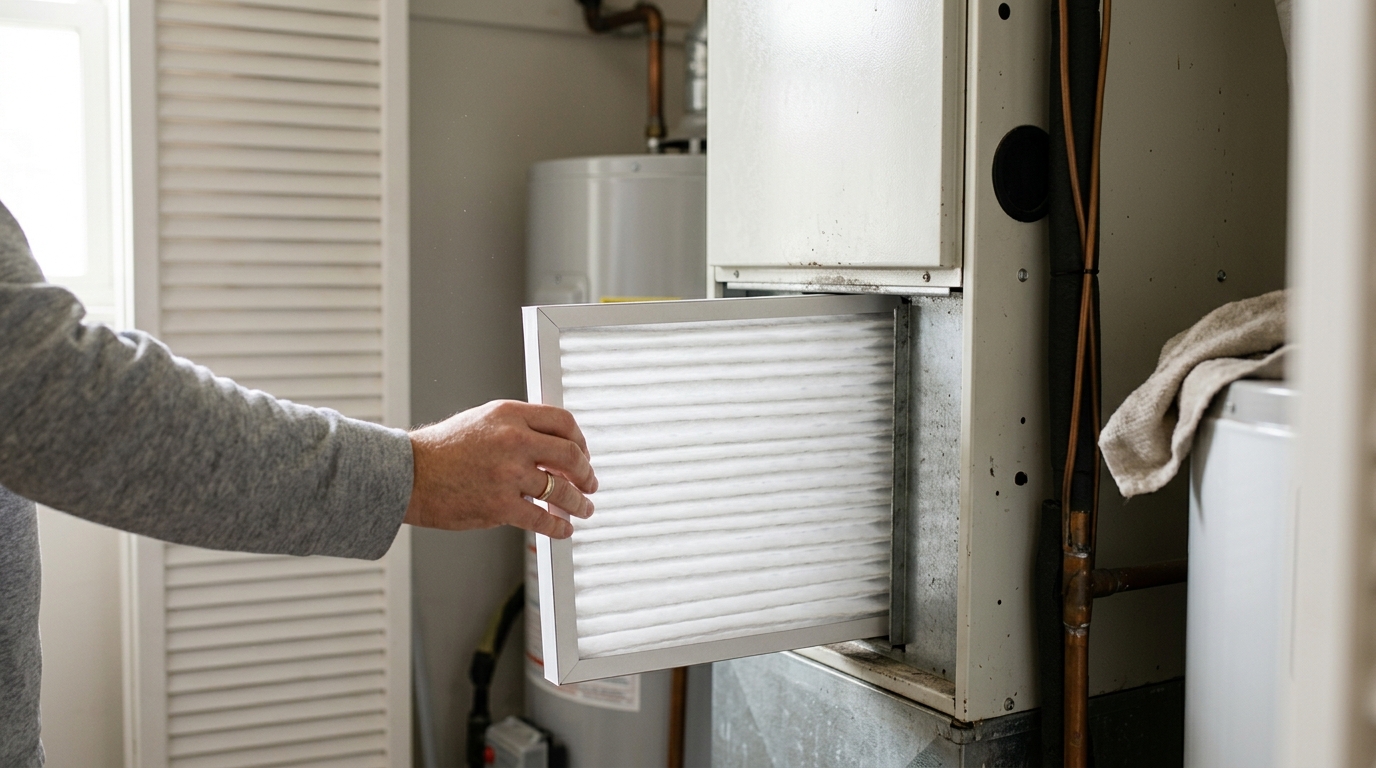
How AC Filters Indoor Air
Central air conditioners pull indoor air through a filter before recirculating it. A clean, properly fitted filter can capture dust, pollen, pet dander, and some airborne particles. Check the system manufacturer’s guidance before installing a higher-MERV filter, as overly restrictive filters can reduce airflow in incompatible systems.
Featured in this guide
Breathe Better Indoors, Live Better: A Practical Guide to Improving Indoor Air Quality
Humidity Control Matters
Air conditioning removes moisture as it cools, helping keep indoor relative humidity near the commonly recommended 30% to 50% range. This can discourage mold and dust mites. An oversized AC unit may cool a room too quickly to remove enough moisture, while dirty coils or blocked drains can create moisture problems.
How to Get Better Results
Replace or clean filters on schedule, keep supply and return vents unobstructed, and arrange professional maintenance when needed. During wildfire smoke, high-pollen days, or heavy outdoor pollution, close windows and use recirculation mode when available. A portable air purifier with a true HEPA filter can provide additional particle removal.
For a more detailed explanation of filtration, ventilation, and maintenance, read Does AC help with air quality?
FAQ
Does running AC improve air quality?
Running AC can improve air quality by filtering particles and reducing excess humidity. Its effectiveness depends on filter quality, system maintenance, and whether pollutants are entering from outdoors or indoor sources.
Does AC help when air quality is bad?
AC helps when air quality is bad by limiting the need for open windows and filtering recirculated air. It works best with a clean filter and may be supplemented with a HEPA air purifier.
What is the $5000 rule for AC?
The $5,000 rule suggests multiplying an AC unit’s age by the estimated repair cost. If the result exceeds $5,000, replacement may be more economical, although efficiency, warranty coverage, and overall system condition should also be considered.
See if Breathe Better Indoors, Live Better: A Practical Guide to Improving Indoor Air Quality fits your setup













Leave a comment