
Best Workout Sequence at Home: A Simple 25-Minute Plan
35% off on product page · save $3.23
Best Workout Sequence at Home: A Simple 25-Minute Plan
Give each part of your workout a job
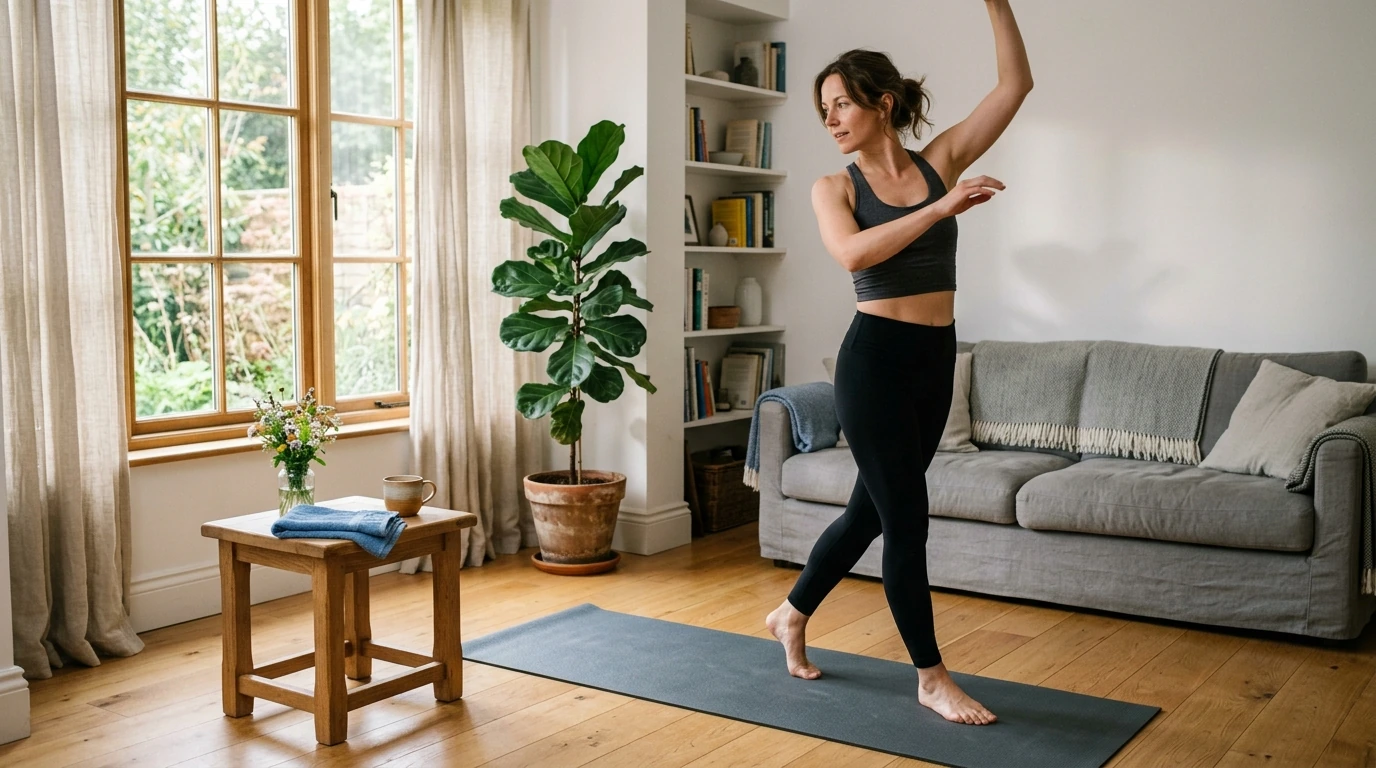
We like a home workout you can remember without watching the clock every minute: ease in, do controlled strength work, add cardio if it suits your day, then slow down. Aim for roughly 25 minutes, but let rest and your ability set the pace.
Warm up, then work on strength
March in place, circle your shoulders and try gentle hip hinges for about five minutes. If you plan to squat, practice comfortable squats to a chair. For push-ups, move your shoulders and wrists before trying a wall variation. Increase your pace gradually; you should still be able to talk comfortably.
For the main block, try 8–12 chair squats, 8–12 glute bridges, 5–10 wall or counter push-ups, and a 15–30-second plank or dead bug. Choose versions you can control and rest as needed. One or two rounds may be enough when you’re starting. When they feel manageable, add a round or make one exercise slightly harder—not both at once.
Featured in this guide
Best Workout Sequence at Home – Smart Home Fitness Guide, Bodyweight Strength Plan, Cardio Finisher Routine, Mobility & Recovery Checklist, AI Workout Planning eBook
Decide whether cardio fits today
For a short finisher, march briskly for 30 seconds, then ease off for 30–60 seconds. Repeat for three to five minutes. Side steps are another option; if you choose step-ups, use a stable, low platform. Skip the finisher when you need a gentler session or more time for strength and rest.
Slow your pace for a few minutes afterward. Breathe comfortably and stretch gently if it feels good, without forcing a position. Stop an exercise that causes pain, and seek professional advice for an injury or medical concern.
Make your next session easier to plan
Write down the variations and rounds you completed, plus anything that felt unusually difficult. That gives you a starting point for one sensible adjustment next time. Our Best Workout Sequence at Home eBook brings together a bodyweight strength plan, a cardio finisher routine, and mobility and recovery checklists if you want a planning framework.
Give yourself enough clear space to move. For separate ideas about your indoor environment, you can read our Breathe Better Indoors, Live Better guide.
Use AI to organize your options—not make the decisions for you
An AI planning tool can help arrange a session if you give it useful constraints: how many minutes you have, your experience level, available equipment, exercises you prefer, and how often you want to train. Ask it to include a warm-up, strength block, optional finisher, cool-down, and easier substitutions.
Then review the result before you try it. Is there enough time to rest? Can you perform the suggested variations with control? Does the weekly schedule leave room for recovery? AI can organize ideas, but it cannot assess an injury or replace individualized advice from a qualified healthcare or fitness professional. Our team’s simplest rule is to keep the sequence clear and adjust the workload to you.
Before choosing, compare the product details with your daily routine, available space, care needs, and preferred setup. The strongest option is usually the one that fits the intended use clearly and remains simple to clean, store, and check before repeat use.
It is also worth checking measurements, material notes, included parts, and compatibility details so the item matches the way it will be used after delivery.
FAQ
What is the 3-3-3 rule for workout?
“3-3-3” is used for different workout formulas, so there is no single universal rule. A clear exercise sequence and a manageable weekly schedule are more useful than following an unexplained formula.
Can ChatGPT help me create a workout plan?
Yes. It can organize exercises and suggest easier variations when you give it clear constraints, but you should review the plan for suitability and seek qualified advice for injuries or medical concerns.
What is the 5 4 3 2 1 workout method?
The name can refer to different routines, so the numbers alone don’t define a standard workout. If you use one, make sure its exercises, intensity, and duration fit your ability and schedule.
See if Best Workout Sequence at Home – Smart Home Fitness Guide, Bodyweight Strength Plan, Cardio Finisher Routine, Mobility & Recovery Checklist, AI Workout Planning eBook fits your setup








Leave a comment