
Breathe & Board: A Flexible Travel Anxiety Checklist
25% off on product page · save $1.00
Breathe & Board: A Flexible Travel Anxiety Checklist
Start with what you can control
Travel anxiety can begin before you leave home. We made Breathe & Board: A Calm Traveler’s Checklist for How to Handle Travel Anxiety and Stress a planning companion you can adapt to your route. Use the steps that help you; you do not need to follow every step perfectly.
A day or two before departure, confirm your booking, identification requirements, route, and check-in instructions. Save your confirmation number and departure address somewhere you can reach offline. Keep medication and essential documents accessible rather than in a bag you may not be able to reach. Allow time for ordinary delays, and check your carrier’s current rules for items such as water.
Give each stage of the journey a small plan
Thinking about the entire trip at once can feel overwhelming. Instead, divide travel day into stages: leaving home, arriving at the terminal or station, waiting, and responding to changes. At each stage, pair one practical action with one gentle way to pause.
A travel-day plan you can adjust
| When | Practical next step | If stress rises |
|---|---|---|
| Before leaving | Check essentials and allow travel time. | Pause, unclench your shoulders, and focus on the next task. |
| At the terminal or station | Find your departure point and note any updates. | Move to a quieter spot if one is available. |
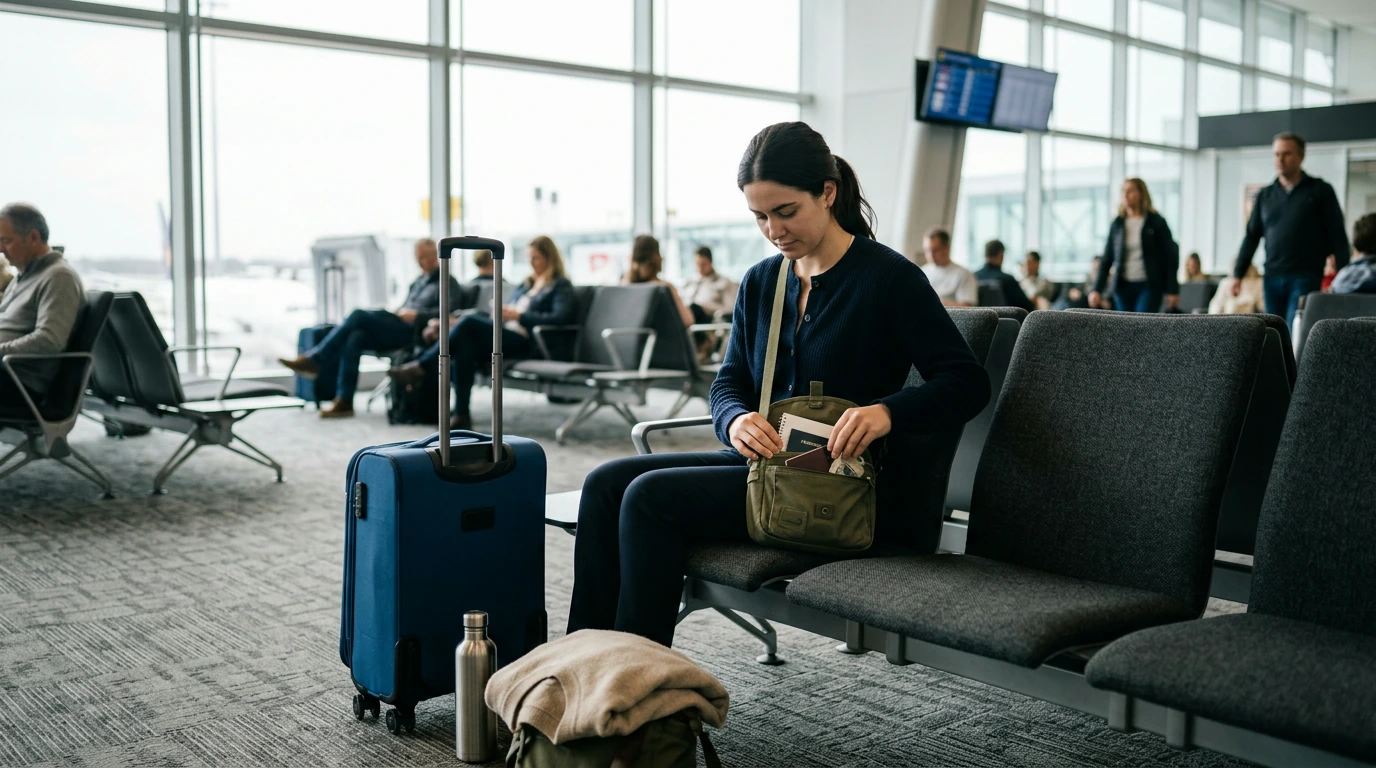
| While waiting | Keep documents handy and choose a simple activity. | Notice your feet on the floor and what is around you. |
| After a change of plans | Confirm the new time or route. | Ask staff for help with the specific detail you need. |
If your gate changes or a connection is delayed, you do not have to rebuild the whole day in your head. Confirm the update, identify your next action, and go from there. A checklist is most useful when it helps you adapt, not when it becomes another set of rules to follow perfectly.
Featured in this guide
Breathe & Board: A Calm Traveler’s Checklist for How to Handle Travel Anxiety and Stress
Choose a comfortable pause
A few slow, comfortable breaths may give you a moment to decide what comes next. Do not force deep breaths or a particular rhythm. If focusing on breathing makes you dizzy, uncomfortable, or more anxious, stop and try another approach.
You might instead notice your surroundings, feel your shoes against the floor, listen to familiar audio, or message someone you trust. Box breathing uses an inhale, hold, exhale, and hold, often with even counts; you can shorten or skip the holds. Choose what feels comfortable rather than aiming for a number.
Include your arrival
Keep your destination address or pickup details with your other travel information. When you arrive, you can take a moment to sit down, get water, or contact the person expecting you before moving on.
If you are also thinking about comfort at home between trips, our Breathe Better Indoors, Live Better: A Practical Guide to Improving Indoor Air Quality addresses a separate set of indoor air-quality decisions.
Check the product’s listed specifications when evaluating include your arrival.
Know when you need more support
Our checklist can support preparation, but it is not treatment for anxiety or a promise of a stress-free trip. If travel anxiety regularly disrupts your plans, speak with a qualified healthcare professional about support suited to you. Seek urgent medical help for concerning physical symptoms rather than assuming they are caused by anxiety.
Before choosing, compare the product details with your daily routine, available space, care needs, and preferred setup. The strongest option is usually the one that fits the intended use clearly and remains simple to clean, store, and check before repeat use.
FAQ
What is the best breathing device to strengthen your lungs?
There is no single best device for everyone. If you have a lung condition or want to improve breathing strength, ask a healthcare professional whether a device is appropriate and which type fits your needs.
What is the Navy Seal breathing technique to calm down?
Often called box breathing, it uses four phases—inhaling, holding, exhaling, and holding—commonly counted evenly. Keep it comfortable, skip the holds if needed, and stop if it causes discomfort.
Why do people cry during breathwork?
Some people experience strong emotions while paying close attention to their breathing, but crying is not a required or universal response. If an exercise feels distressing, stop and choose a grounding approach that feels safer.
See if Breathe & Board: A Calm Traveler’s Checklist for How to Handle Travel Anxiety and Stress fits your setup








Leave a comment