35% off on product page · save $5.38
Cabinet Safety for Kids: A Room-by-Room Checklist
Before choosing a latch, open every cabinet and drawer your child might access. Move medicines, cleaning products, laundry supplies, and other hazardous items to secure storage that children cannot access. A cabinet lock adds a barrier, but it is not a substitute for putting dangerous contents somewhere secure.
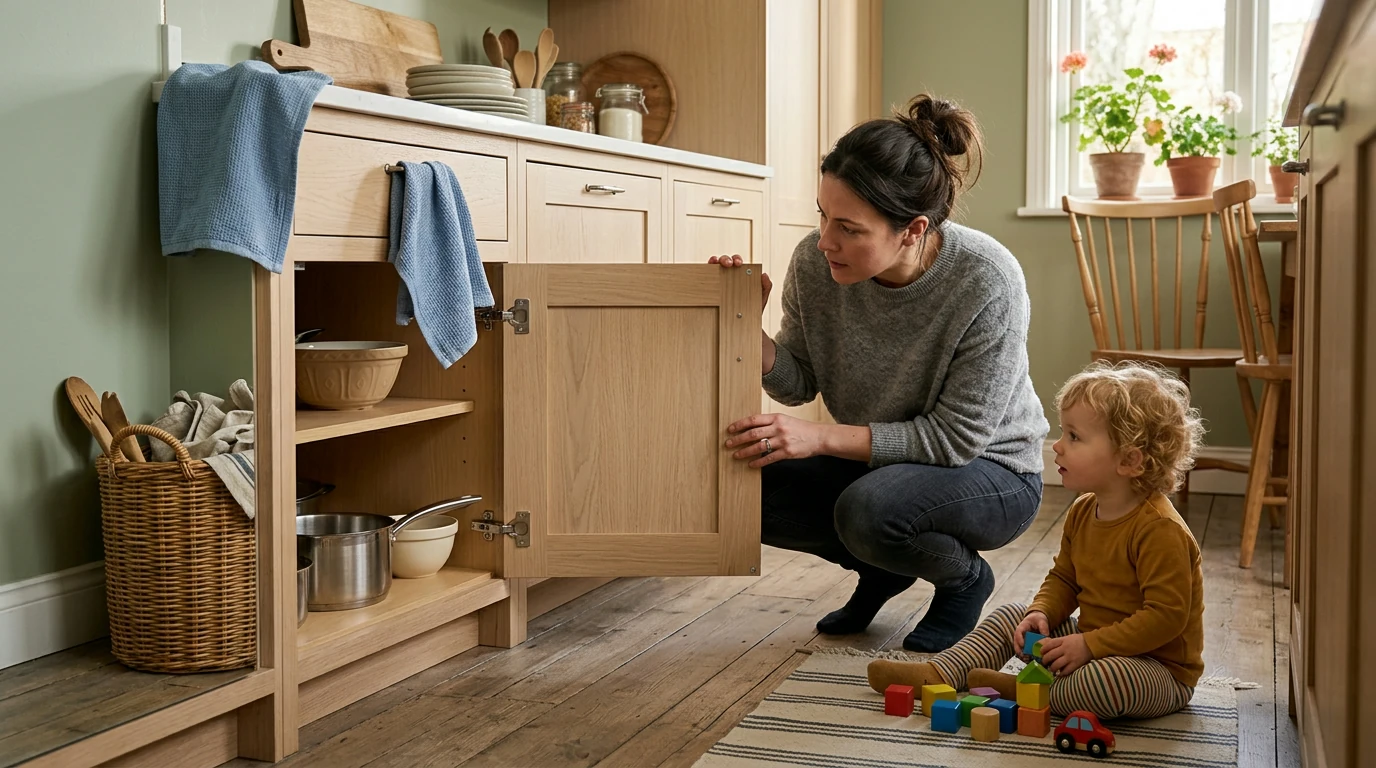
Get down to your child’s eye level as you inspect lower cabinets. Look inside drawers and pull-out shelves, too. Then stand up and consider climbing routes: a chair, step stool, or nearby furniture can change which cabinets are reachable. Do not assume an upper cabinet is inaccessible simply because your child cannot reach it from the floor today.
Keep products in their original containers, and follow their labels for storage and use. We also suggest saving the Poison Help number, 1-800-222-1222 , where everyone caring for your child can find it. For additional prevention guidance, see Poison Help’s prevention tips.
In the kitchen, check under the sink, lower cupboards, drawers, and pull-out shelves. Move cleaners, knives, breakables, and heavy items to genuinely secure storage—not just a less obvious cabinet.
In bathrooms, include medicine cabinets, lower storage, and guest bathrooms. Medicines need secure storage even when a cabinet appears high. In laundry rooms, garages, and utility areas, look for detergents, chemicals, tools, and batteries. Make sure everyone caring for your child knows which areas must remain inaccessible.
Featured in this guide
Cabinet Safety for Kids Checklist | Child Safety for Cabinets Digital Download | Printable Home Safety Guide for Parents
Once hazardous contents are securely stored, assess each reachable door or drawer. Note whether a cabinet has one door or two, where a device could attach, and how far the door opens before a latch engages. Compare devices for compatibility with the cabinet’s construction and for ease of consistent adult use.
Install each device according to its manufacturer’s directions. Then close and test the door or drawer: does the latch catch reliably, does hardware shift, or can the opening expose the contents? Recheck for wear and loose parts over time. No lock replaces supervision or secure storage.
Our Cabinet Safety for Kids Checklist is a printable digital download for organizing room-by-room checks. Use it as a planning aid while you secure hazards and test the barriers you install.
Look for detergents, chemicals, tools, and batteries wherever you store household supplies. A closed door to a laundry room or garage is helpful only while it remains closed. Inspect the cabinets and drawers inside those spaces as well, and make sure caregivers know which areas must stay inaccessible to children.
Once hazardous contents are securely stored, assess the doors and drawers a child can reach. Is the cabinet single-door or double-door? Does it have a frame or another suitable place for the device to attach? How far does the door open before a latch engages? These details matter more than choosing one style of lock for the entire home.
Compare devices for compatibility with the cabinet material, secure closure, and ease of use for adults. A barrier you can operate consistently is more useful than one that frequently gets left disengaged. Install each device according to its manufacturer’s directions; avoid assuming that a latch suitable for one cabinet will fit another.
After installation, close and test every door and drawer from different angles. Check whether hardware shifts, whether the door opens far enough to expose its contents, and whether the latch reliably catches after normal use. Recheck for loose parts or damage over time. The U.S. Consumer Product Safety Commission’s childproofing guidance is another useful reference as you review hazards throughout your home.
Cabinet safety is not a one-time project. Walk through your home again when your child begins crawling, pulling up, or climbing. Repeat the check after moving furniture, reorganizing supplies, or adding a new cabinet or appliance. A storage spot that worked last month may no longer be out of reach.
Share your storage rules with everyone who cares for your child. Show them how each latch works, which doors must remain closed, and where household products belong after use. If a device is difficult to close, address the problem rather than relying on someone to remember an extra step.
Compare related options such as Elegant Red Velvet Party Dress with Hollow Design to match features, dimensions, and use case before choosing.
Move hazardous contents to secure storage first. Then assess every reachable cabinet and drawer, install compatible safety devices as directed, and test them regularly.
Identify whether each door is single or double and choose a compatible device for its construction. Follow the installation directions, test the closed door, and watch for wear or changes in access.
The best choice depends on the cabinet and what it contains. Look for a compatible device that stays secure when tested and that adults can use consistently; keep hazardous items securely stored regardless.




Leave a comment