
Build a Cat Play Routine with the Cat Exercise Pack
10% off on product page · save $27.22
Build a Cat Play Routine That Fits Your Cat
Start with your cat’s signals
A useful play routine begins with what your cat chooses to do. Watch for alert periods, preferred toy movements, and signs that they have had enough. Watching closely or taking a single swipe counts as engagement; your cat does not need to sprint.
If your cat has mobility problems, breathing concerns, or a known medical condition, ask your veterinarian before changing their activity routine.

Build a routine from short play sessions
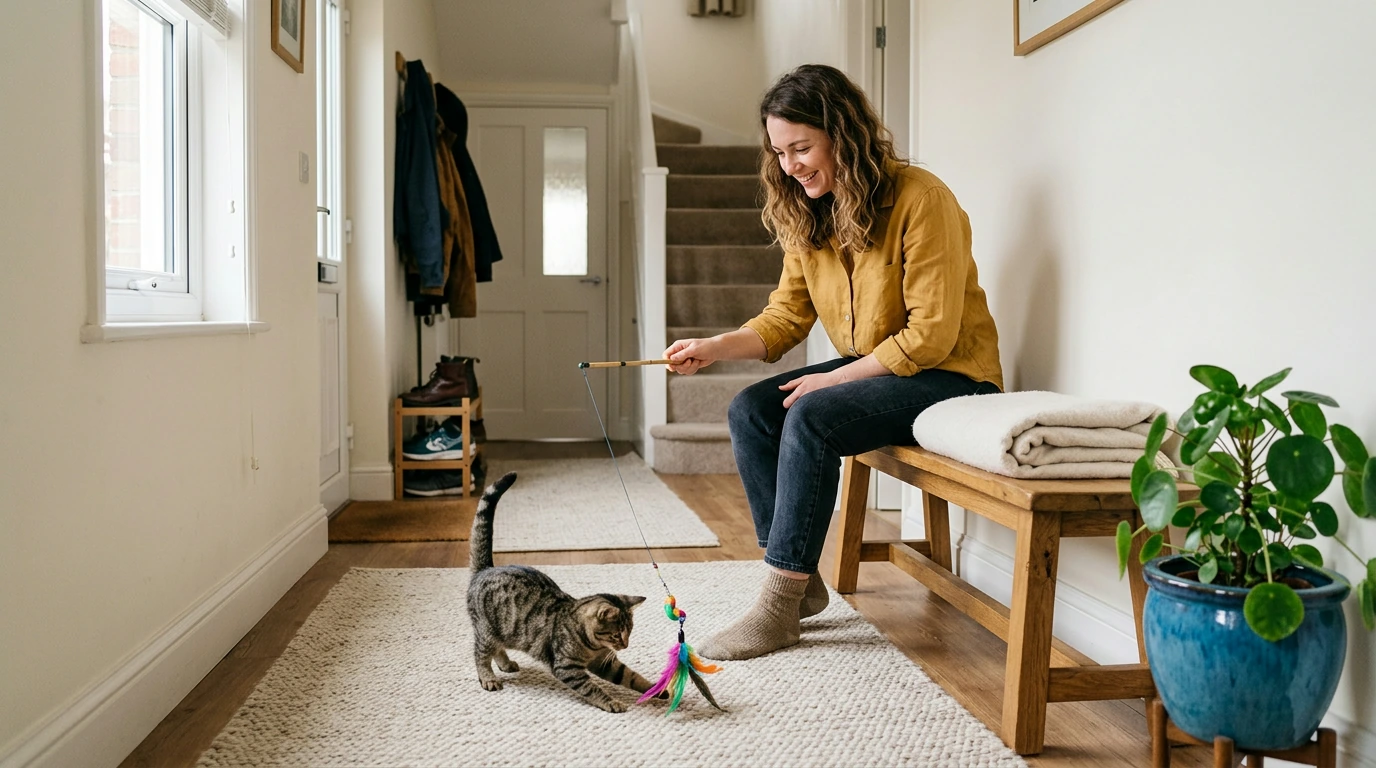
Start with a few minutes of interactive play when your cat already seems interested. Move a toy to invite attention, pause so they can stalk it, and give them opportunities to catch it. Then slow the action before you put the toy away. If your cat walks off, let the session end. You can adjust the length and frequency over time instead of imposing a rigid daily goal.
Variety helps you learn what works. A wand toy can encourage stalking and pouncing; a rolling toy may appeal to a cat who likes to chase. Climbing opportunities offer a different kind of movement, while a food puzzle can turn part of a meal into an activity. Supervise toys when appropriate, especially those with strings or small detachable pieces, and put string-like toys away when play ends.
For another source of indoor enrichment ideas, explore The Ohio State University Indoor Pet Initiative’s cat resources. You can use those ideas to vary play without assuming every activity will suit every cat.
Featured in this guide
Cat Exercise Pack for a Vibrant, Active Lifestyle – 3-in-1 Bundle of Cat Exercise Checklists
Choose a plan you can repeat
Pick one time your cat is often alert and offer a brief game. Notice what held their attention and when they chose to stop. On another day, repeat what worked or try a different activity. There is no need to impose the same duration on every cat.
Our Cat Exercise Pack for a Vibrant, Active Lifestyle is a 3-in-1 bundle of cat exercise checklists. You can use it to organize play ideas and keep track of the activities you want to try; it is not a prescribed exercise target.
Keep variety practical
You can rotate a favorite game with a food puzzle or a different toy movement without replacing what your cat already enjoys. Give your cat room to retreat, and never chase them with a toy when they are trying to leave.
If you are reviewing your home environment alongside play opportunities, our practical guide to improving indoor air quality addresses that separate home-care topic.
Check the product’s listed specifications when evaluating keep variety practical.
Turn good intentions into a habit
The most useful routine is one that fits both your cat’s interest and your day. Choose one manageable play opportunity—perhaps when your cat becomes alert in the evening—and pay attention to the response. If it goes well, repeat it. If not, try another time or a different movement before deciding your cat is uninterested in play.
Our team sees the Cat Exercise Pack as a practical companion for planning play and staying consistent, not a prescription for how much any cat must do. Keep your observations simple: which activity prompted interest, when your cat chose to stop, and whether they settled comfortably afterward. Those details can guide your next session.
A comfortable home routine can include more than active games. If you are reviewing your household environment alongside your cat’s play opportunities, our practical guide to improving indoor air quality covers that separate home-care topic. For movement, begin with your cat’s signals. Explore the Cat Exercise Pack, choose one inviting activity, and adapt from there.
“The checklists are so easy to use, even for a newbie like me.”
FAQ
What is the silent killer of cats?
There is no single condition known by that name that you can reliably identify at home. Cats can hide signs of illness, so contact your veterinarian if you notice a concerning change in breathing, appetite, movement, or behavior.
Do cats hear when you talk to them?
Yes, cats can hear you speak, though they may not respond every time. A calm voice can be one way to invite interaction without pressuring your cat to play.
How many minutes a day should a cat exercise?
Most adult cats should get about 20 to 30 minutes of active exercise each day. Divide that time into two or three sessions lasting 5 to 15 minutes, since cats typically prefer short bursts of movement over one extended workout.
See if Cat Exercise Pack for a Vibrant, Active Lifestyle – 3-in-1 Bundle of Cat Exercise Checklists fits your setup








Leave a comment