82% off on product page · save $29.63
Gentle Baby Hair Care: When to Brush or Comb

No. Some babies have so little hair that grooming is optional, and even a baby with a full head of hair may need only a quick pass now and then. A soft brush can smooth fine strands with broad, light strokes. A comb offers more direction when hair gets long enough to fall across the face or needs a little tidying after a bath.
Let your baby’s hair—and your baby’s mood—guide you. You do not need to brush a certain number of times a day or keep going until every strand lies flat. If your baby is comfortable and the hair is tidy enough for you, you can stop. If the comb meets resistance, pause rather than pulling it through.
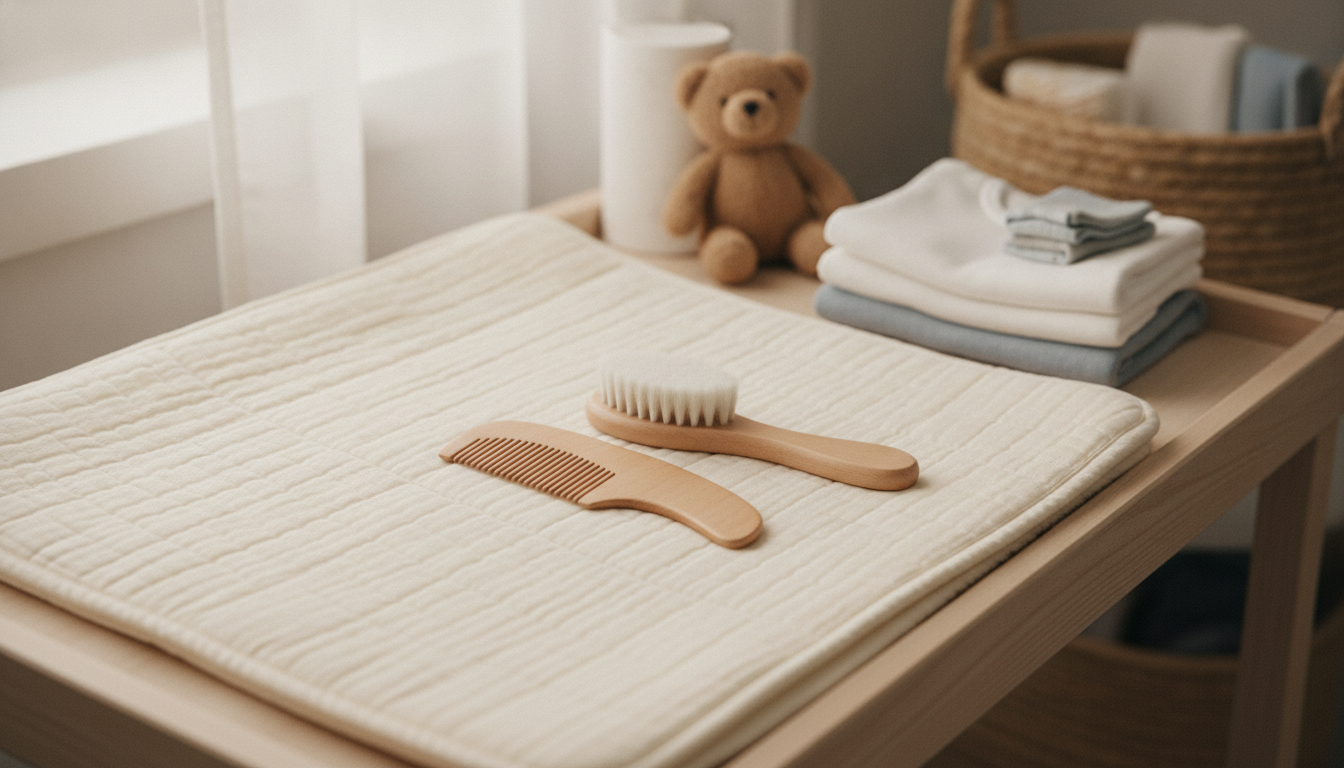
For fine or sparse hair, start with a gentle brush stroke in the direction the hair grows. For longer hair, guide the comb slowly through a small section at a time. If it catches, stop rather than pulling.
Use your fingers to loosen a small tangle first. Hold the hair near the scalp while working gently from the ends to limit pulling. You can leave a stubborn tangle for another time.
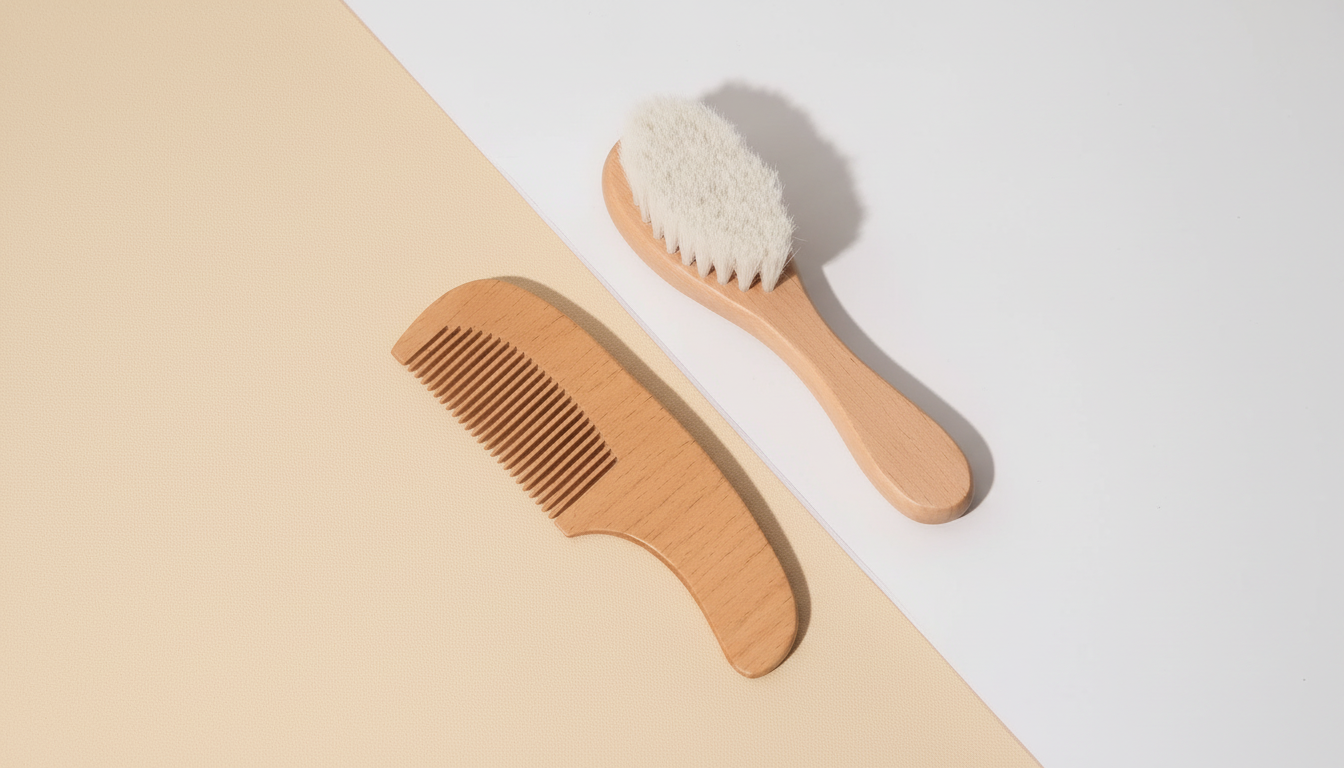
Featured in this guide
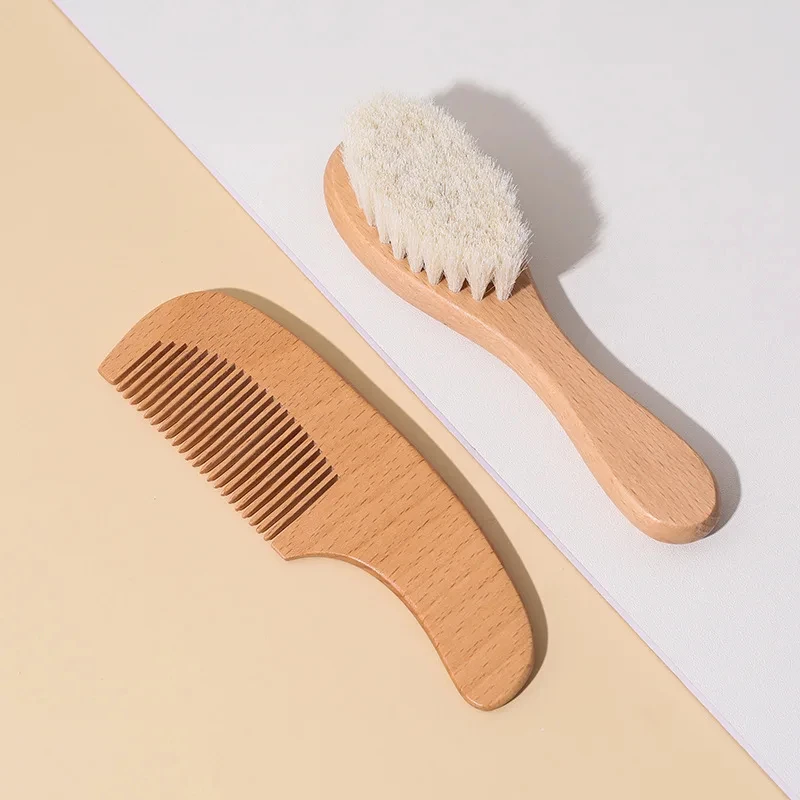
Baby Hairbrush and Comb Set – Natural Ash Wood & Gentle Wool-Like Brush
Choose a time when your baby is settled. Support their head, use very light pressure, and keep the brush or comb away from their eyes—especially if they turn or reach. If they fuss or turn away, take a break. Neat hair can wait.
Before use, feel the tools for rough or damaged areas. Follow their care instructions for cleaning and drying, and store them out of your baby’s reach afterward.
Today might call for two brush strokes; tomorrow might call for none. As your baby’s hair grows, you can switch between the brush, comb, and your fingers. Our team’s rule is simple: use the gentlest approach that works, and stop when your baby has had enough.
For another simple household routine, you can read our practical guide to improving indoor air quality.
The right routine may be a brush stroke or two today and no grooming tomorrow. As your baby’s hair changes, you can decide whether the brush, the comb, or simply your fingers make the most sense. We offer the Baby Hairbrush and Comb Set for those small daily decisions—not because every baby needs an elaborate hair-care routine.
If you enjoy building simple household routines around your family’s needs, our practical guide to improving indoor air quality is separate reading for your home. For your baby’s hair, though, you can keep the goal modest: a gentle touch and a comfortable moment together.
1
Prepare the brush for the care when cleaning check
2
Clean the brush with the material-approved method
3
Remove cleaner residue from every brush surface
4
Let the brush dry completely before use
Before choosing, compare the product details with your daily routine, available space, care needs, and preferred setup. The strongest option is usually the one that fits the intended use clearly and remains simple to clean, store, and check before repeat use.
It is also worth checking measurements, material notes, included parts, and compatibility details so the item matches the way it will be used after delivery.
No. A soft brush may be useful for fine hair, while a comb can help tidy longer hair, but you only need to use a tool when it is helpful and comfortable for your baby.
There is no set starting age. If your baby has hair to tidy, comb it gently and stop if the comb catches or your baby seems uncomfortable.
Choose a smooth comb that moves easily through your baby’s hair. Work slowly and never force it through a tangle.
Choose a brush that feels soft against your baby’s scalp, and use it with light pressure. Avoid stiff brushing or scrubbing.



Leave a comment