


7 Toddler Vocabulary Games for Easy Daily Word Play
Playful ideas for meals, books, bath time, cleanup, and walks
7 Toddler Vocabulary Games for Easy Daily Word Play
Why Daily Word Play Helps Toddlers Learn
Toddlers learn vocabulary by hearing words repeatedly in meaningful situations. Naming a spoon at lunch or a duck in the bathtub connects each word to something the child can see, touch, or do.
Short activities are usually easier to repeat than formal lessons. Try several playful moments lasting two to five minutes. Follow the child’s attention whenever possible: if a toddler notices a truck, talk about the truck instead of redirecting attention to something unrelated.
Gestures, signs, sounds, pointing, and partial word attempts all count as communication. Responding warmly encourages participation without requiring the child to pronounce each word perfectly. The Talking Is Teaching resource offers additional ideas for talking, reading, and singing during daily life.
Check the listed dimensions for why daily word play helps toddlers learn against the available vehicle space before use.
The Seven-Game Edit
| Game | How to Play | Words to Try | Natural Moment |
|---|---|---|---|
| Find and Point | Find, point to, or touch one named object together. | Cup, shoe, ball, book | Dressing or cleanup |
| Mystery Bag | Pull safe household objects from a bag and name them. | Spoon, sock, brush, block | Quiet play |
| Action Copy | Name an action, demonstrate it, and invite imitation. | Clap, jump, wave, roll | Active play |
| Sound Detective | Listen for a sound and identify its source. | Dog, car, bird, water | Walks or window watching |
| Choice Talk | Name two options and let the child choose. | Apple, banana, red, blue | Meals or dressing |
| Picture Hunt | Look for repeated animals, objects, colors, or actions. | Cat, baby, sleep, big | Story time |
| Finish the Phrase | Pause before a familiar word in a song or book. | Go, up, down, again | Songs or bedtime |
Featured in this guide
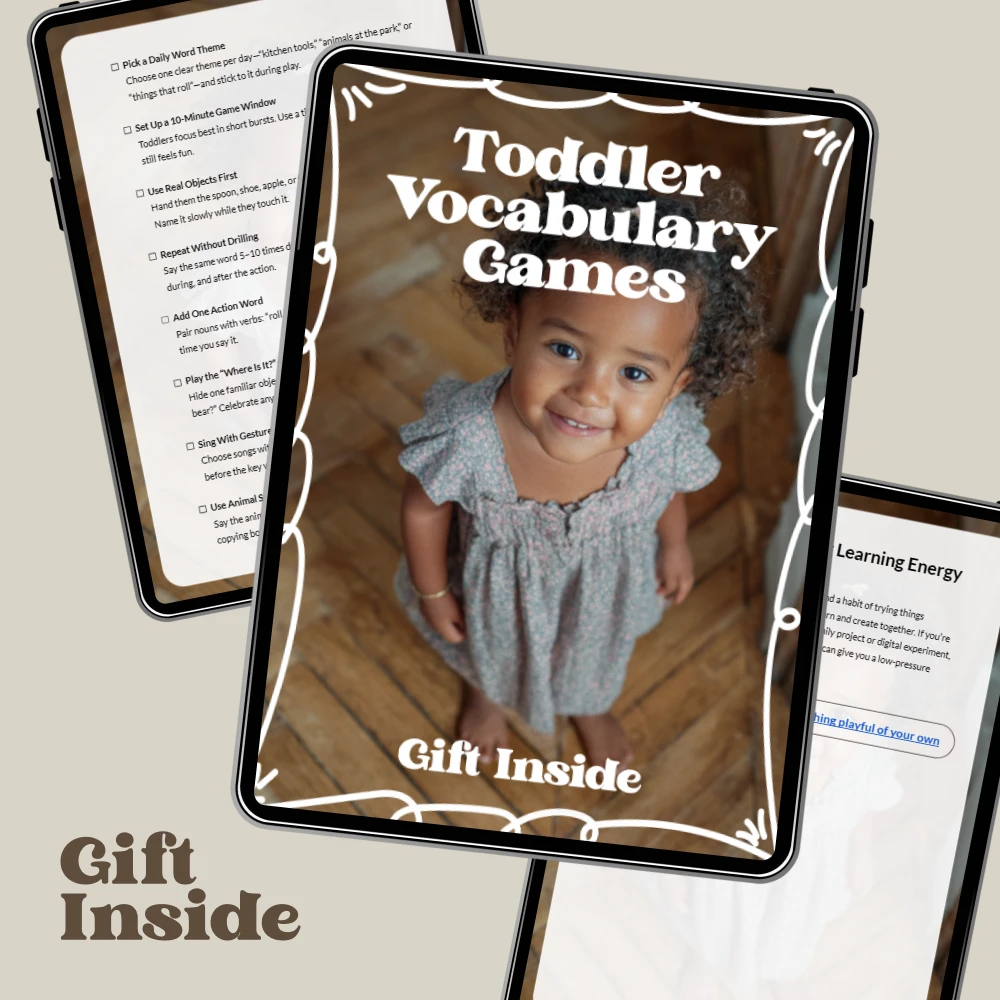
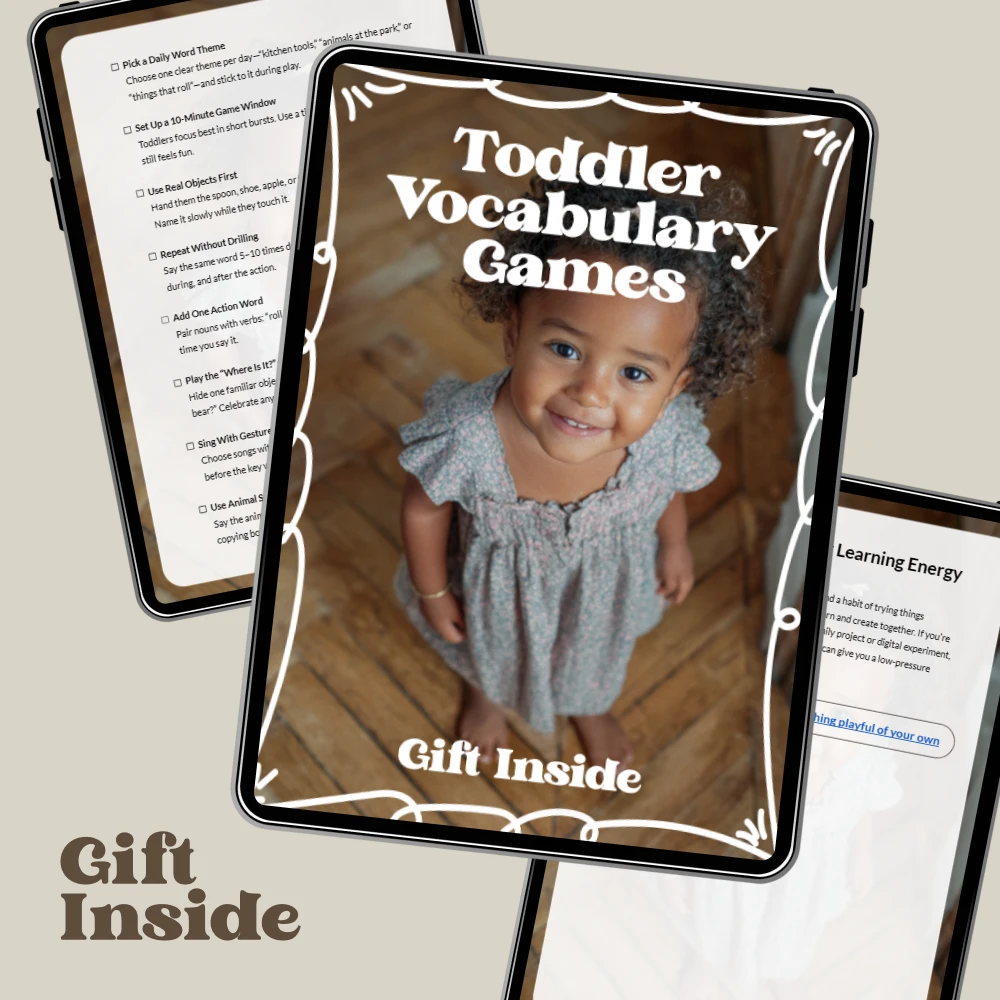
Toddler Vocabulary Games Checklist – Easy Daily Word Play for Speech Development, Fun Toddler Vocabulary Games at Home
Turn Routines Into Language
At meals, name foods, utensils, tastes, temperatures, and actions: cold milk , cut banana , stir , and all done . While dressing, connect words to movement with phrases such as sock on , arm in , and shirt off .
Bath time naturally introduces action and describing words, including wash , pour , splash , wet , dry , full , and empty . On a walk, name whatever holds the child’s attention and add one detail. If the child says “car,” respond with “blue car” or “car goes fast.”
Cleanup is an easy setting for categories and location words. Sort blocks, animals, or vehicles while talking about what goes in , on , or under .
Make Every Game Feel Easier
- Begin with favorite foods, toys, animals, people, and routines.
- Use more comments and fewer test-like questions.
- Offer two named choices when open-ended questions feel difficult.
- Add gestures, expressions, movement, and playful sound effects.
- Repeat a word in different settings, such as “big truck,” “big bite,” and “big bubble.”
Instead of repeatedly asking, “What is this?” model the language: “A yellow duck—it is swimming.” Then pause. The child can respond with a look, movement, sound, gesture, or word.
Expand Without Pressure
Add one word to the child’s message. “Dog” can become “big dog,” while “dog run” can become “the dog is running.” Track patterns across several weeks rather than judging progress from one day.
Children develop communication skills at different rates. Avoid demanding repetition, criticizing pronunciation, or comparing siblings. Families using multiple languages can continue speaking the languages they know best.
Vocabulary games do not replace individualized assessment or therapy. Caregivers concerned about hearing, understanding, social communication, speech, or loss of previously used skills can consult a pediatrician or certified speech-language pathologist.
A Simple Seven-Day Word-Play Routine
- Monday: Name five objects during cleanup.
- Tuesday: Copy three action words.
- Wednesday: Offer two named snack choices.
- Thursday: Take a sound-detective walk.
- Friday: Explore a mystery bag.
- Saturday: Hunt for actions or animals in a book.
- Sunday: Repeat the week’s favorite game.
Track progress across several weeks rather than from one day to the next. Add one word to the child’s message: “dog” can become “big dog,” while “dog run” can become “the dog is running.”
Compare related options such as From Scarcity to Financial Calm: A Practical Guide to Overcoming a Scarcity Money Mindset to match features, dimensions, and use case before choosing.
FAQ
How do I increase my toddler’s vocabulary?
Narrate routines, read together, follow the toddler’s attention, offer choices, and expand short messages by one word. Favor responsive conversation over frequent testing.
What are some fun vocabulary games for children?
Children can sort familiar objects, match objects with pictures, act out verbs, identify sounds, or search books for a chosen color or animal. Adjust the number of words and choices to the child’s age and communication level.
What are some good word games for toddlers?
Good options include finding named objects, copying actions, identifying animal sounds, and choosing between two items. Toddlers can participate by looking, pointing, gesturing, making sounds, or speaking.
See if Toddler Vocabulary Games Checklist – Easy Daily Word Play for Speech Development, Fun Toddler Vocabulary Games at Home fits your setup













Leave a comment