
High Coolant Temperature: How to Fix It Safely
10% off on product page · save $1.22
High Coolant Temperature: How to Fix It Safely
Why Is the Coolant Temperature Too High?
High coolant temperature usually indicates that the engine’s cooling system cannot remove heat effectively. Common causes include low coolant, a leak, a failed thermostat, a clogged radiator, an inoperative cooling fan, or a damaged water pump.
If the temperature gauge enters the red zone or a warning appears, turn off the air conditioner and pull over safely. Continuing to drive can warp cylinder heads, damage gaskets, and create an expensive engine repair.
How Should You Cool an Overheating Engine?
Park on a level surface, switch off the engine, and allow it to cool for at least 30 minutes. Never remove the radiator or coolant-reservoir cap while the system is hot because pressurized coolant can cause severe burns.
Once the engine is completely cool, inspect the reservoir and the ground beneath the vehicle. Steam, puddles, split hoses, or a sweet odor can indicate a leak that requires professional repair.
Featured in this guide
Coolant Temperature Warning Light Explained: A Complete Guide for Drivers | Understanding and Responding to Engine Alerts
How Do You Check and Refill Coolant?
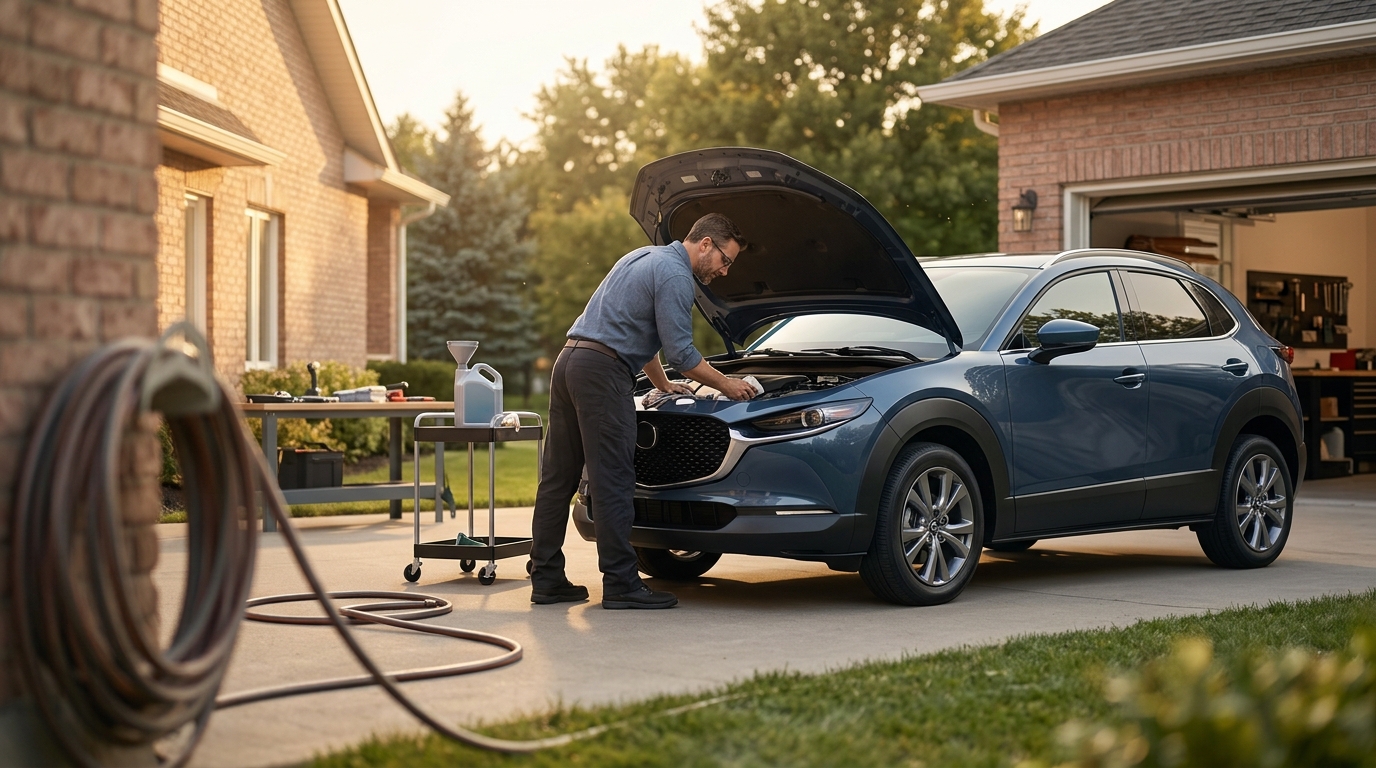
Check the coolant level against the “MIN” and “MAX” marks on the expansion tank. If it is low and no major leak is visible, add the coolant type and mixture specified in the owner’s manual; many vehicles require a 50/50 coolant-and-distilled-water blend.
Do not mix incompatible coolant formulas based only on color. Review the manufacturer specification on the container, and learn more in this guide to fixing high-temperature coolant problems.
Which Cooling-System Parts Should Be Inspected?
Examine radiator hoses for cracks, soft sections, swelling, and loose clamps. With the engine cool, also inspect the radiator, reservoir, and water-pump area for dried coolant residue or wet spots.
Start the vehicle only if it is safe to do so and observe whether the electric radiator fan operates as the engine warms. A faulty fan, thermostat, temperature sensor, fuse, relay, or water pump may require diagnostic testing and replacement.
When Should You Stop Driving?
Stop driving if the gauge returns to the red zone, coolant pours from the vehicle, white exhaust smoke appears, or the engine runs roughly. Arrange a tow rather than repeatedly adding coolant, especially if overheating returns within a few miles.
A technician can pressure-test the system, verify thermostat operation, test the fan circuit, and check for combustion gases in the coolant. These procedures distinguish a simple leak from internal engine damage.
FAQ
What do I do if my coolant temperature is too high?
If your coolant temperature is too high, pull over safely, shut off the engine, and wait at least 30 minutes before inspecting the reservoir. Do not open a hot cooling system; tow the vehicle if the warning returns or a significant leak is present.
How to fix overheating coolant?
To fix overheating coolant, first correct low coolant or visible leaks using the manufacturer-approved coolant specification. If overheating continues, have the thermostat, radiator fan, radiator, water pump, and head gasket professionally tested.
See if Coolant Temperature Warning Light Explained: A Complete Guide for Drivers | Understanding and Responding to Engine Alerts fits your setup













Leave a comment