
Outside in Bad Air Quality? Symptoms and Safety Tips

25% off on product page · save $4.33
Outside in Bad Air Quality? Symptoms and Safety Tips
What you might feel right away
Bad air can irritate your eyes, nose, and throat or cause coughing, a headache, or shortness of breath; some people feel no immediate symptoms even when the air is unhealthy. Children, older adults, pregnant people, and people with heart or lung conditions may be more affected, and strenuous activity can increase the amount of polluted air you breathe.
If you develop chest pain, severe trouble breathing, or symptoms that are rapidly getting worse, get urgent medical help rather than trying to wait out the air quality.
Check the listed dimensions for what you might feel right away against the available vehicle space before use.
What to do while you are outside
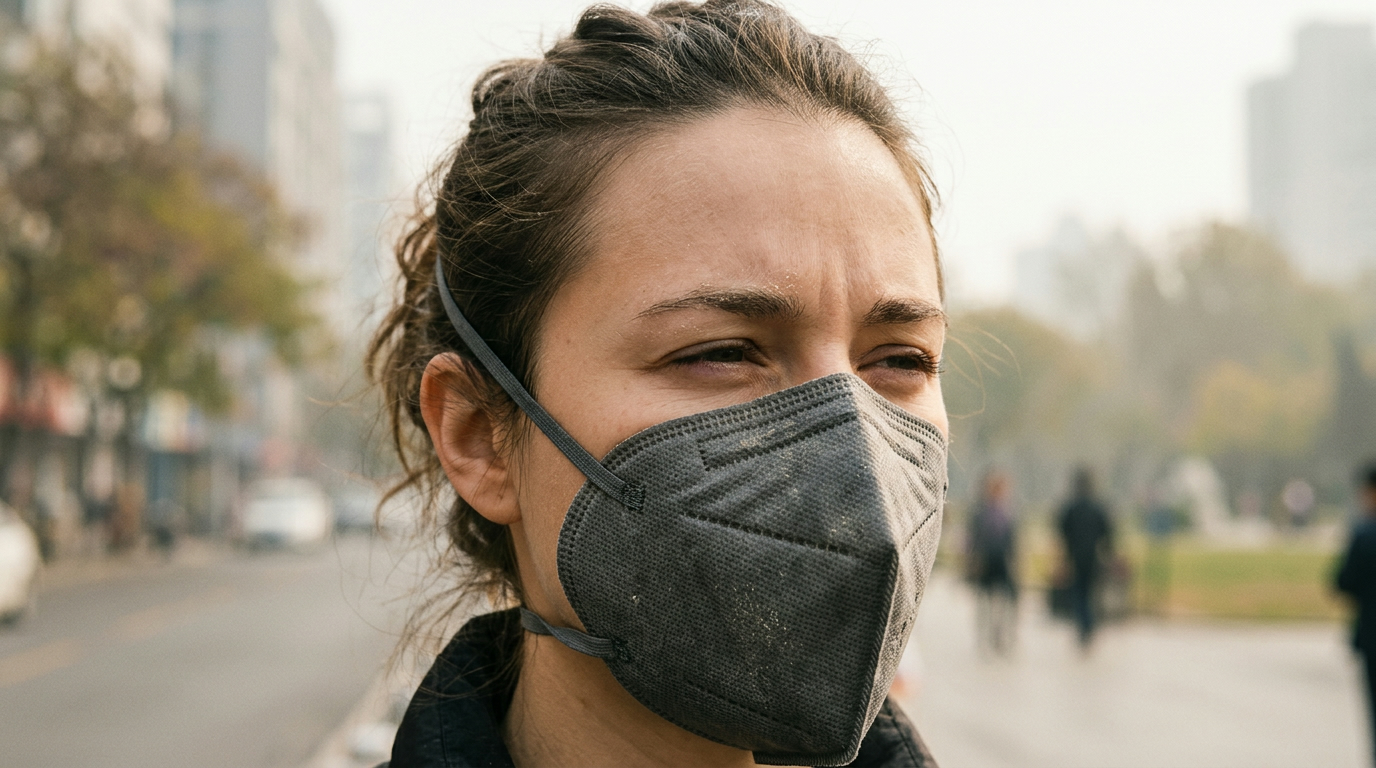
Check your local Air Quality Index (AQI) and any health guidance for your area, then shorten or postpone outdoor time when conditions are poor—especially exercise or physical work. If you must go out during a smoke or fine-particle event, a well-fitting N95 respirator can reduce the particles you inhale, but it will not protect you from gases and may not be suitable for everyone.
Move indoors if you begin to feel unwell, and follow your existing asthma or other medical action plan if you have one. There is no single “safe” number of minutes outdoors in bad air: a brief, easy errand and a long run create different levels of exposure.
Featured in this guide
Breathe Better Indoors, Live Better: A Practical Guide to Improving Indoor Air Quality
How to make coming indoors more helpful
On days when outdoor air is poor, keep windows and doors closed when practical, and use an appropriately sized air purifier or HVAC filtration if you have it. Avoid adding indoor pollution by smoking, burning candles, or doing other activities that produce smoke, and check outdoor conditions before opening windows again.
Our Breathe Better Indoors, Live Better: A Practical Guide to Improving Indoor Air Quality offers a room-by-room starting point for thinking about your indoor air. We recommend focusing first on the actions that fit your home and the specific air-quality alert you are facing.
FAQ
How long can you be out in bad air quality?
There is no universal time limit because pollutant levels, your health, and your activity all matter. Use local AQI guidance, spend less time outside as conditions worsen, and head indoors if you develop symptoms.
See if Breathe Better Indoors, Live Better: A Practical Guide to Improving Indoor Air Quality fits your setup








Leave a comment