
A Modern Minimalist Children’s Nightstand That Works
59% off on product page · save $709.98
A Modern Minimalist Children’s Nightstand That Works
What Modern Minimalist Style Means in a Child’s Room
In practical terms, modern minimalist style favors a simple silhouette, useful storage, and fewer items left in view. At the bedside, that might mean one current book on top instead of a tall stack, with small belongings tucked into a drawer. The room can still feel unmistakably your child’s. A favorite story, a drawing, or another small personal touch brings warmth without asking the nightstand to display every treasured thing at once.
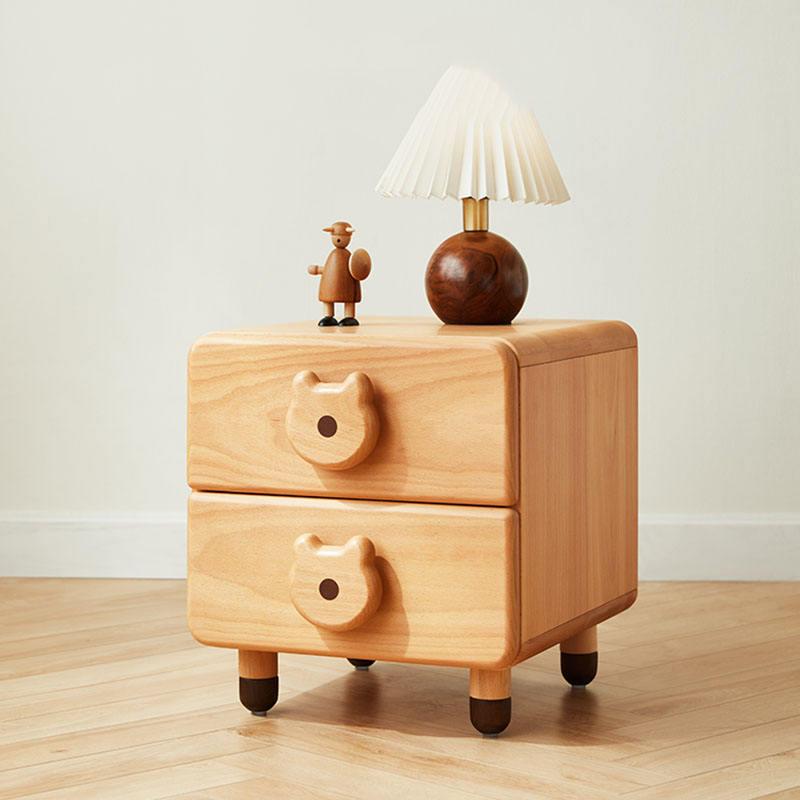
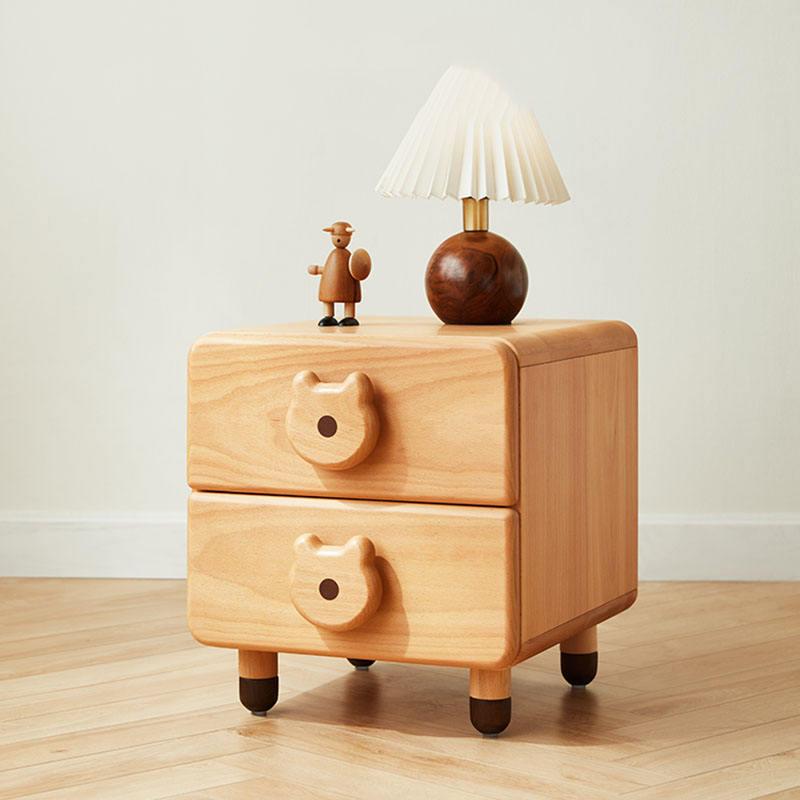
Our Modern Minimalist Children’s Nightstand with Storage Drawer is an option if you want a dedicated bedside surface and a place to put items out of sight. Before deciding whether it belongs in your child’s room, consider what your child actually reaches for at bedtime. A useful nightstand supports those habits rather than creating another spot to pile things.
Give the drawer a clear job
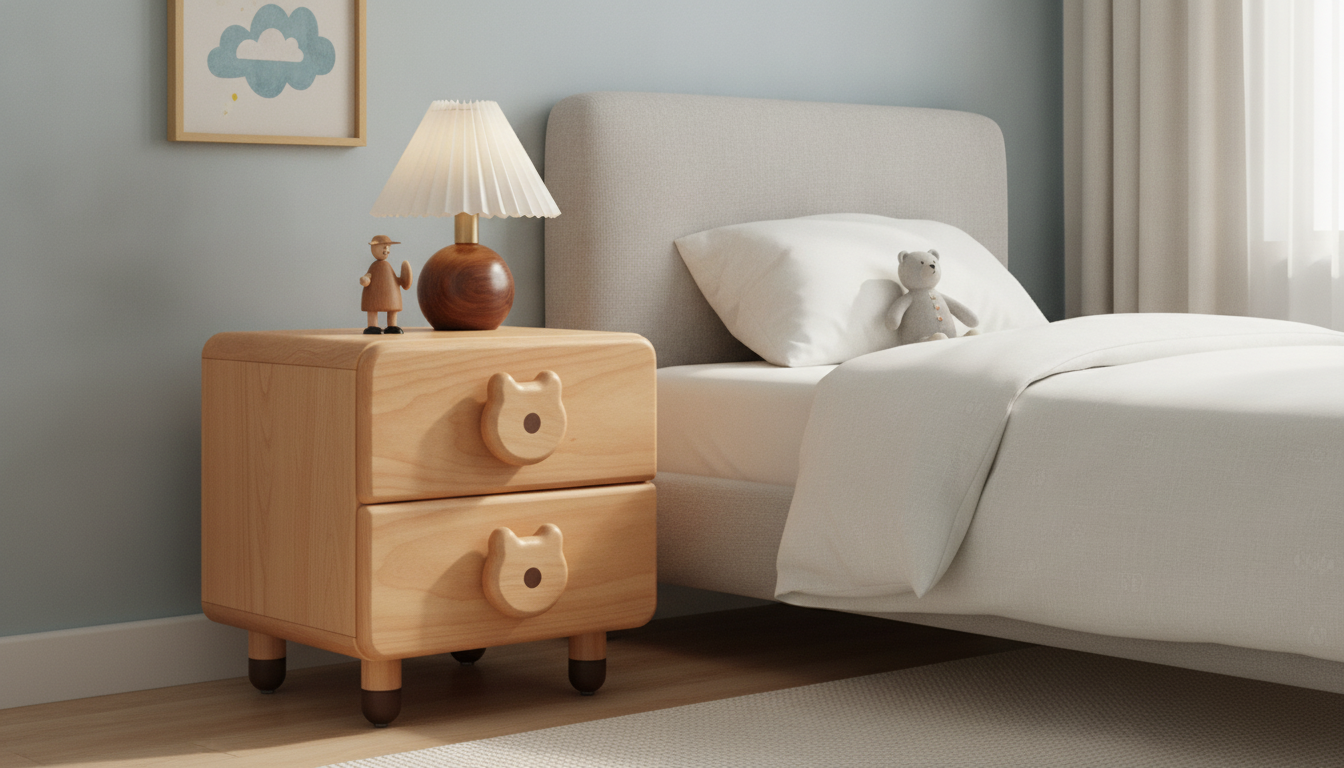
A drawer works best when everyone knows what goes in it. You might reserve it for a current book, a small notebook, and a few other age-appropriate bedtime belongings. Keep its contents limited enough that your child can find what they need without searching through a jumble. If a toy, craft supply, or stack of papers doesn’t serve the evening routine, give it a home elsewhere.
Be just as selective with the top. Leave room for the one or two things your child regularly uses there, rather than treating every open inch as storage. A consistent place for small items makes the end-of-day reset more manageable: your child can put things back instead of having to decide where they belong each night. We like to start with a simple plan and adjust it after the family has lived with it for a while.
A Simple Bedside Setup
| Area | Good candidates | Habit to encourage |
|---|---|---|
| Nightstand top | A current bedtime book and one everyday essential | Return other items to their places |
| Storage drawer | Small, age-appropriate bedtime belongings | Put items back after use |
| Elsewhere in the room | Overflowing book stacks, toys, and outgrown items | Review what still belongs near the bed |
Featured in this guide
Modern Minimalist Children’s Nightstand with Storage Drawer
Measure for use, not just placement
Measure the floor space beside the bed and compare it with the nightstand’s dimensions. Allow room for the drawer to open and for your child to stand in front of it. Keep the walking route clear, and account for nearby doors and other furniture.
Consider height as well as width: your child should be able to reach the surface and use the drawer without awkward stretching. Follow the manufacturer’s assembly and anchoring instructions, and arrange the room to discourage climbing on furniture. A tidy bedside setup is not a substitute for furniture safety precautions.
Leave room for the routine to change
Children’s interests change, and their bedside storage can change with them. When the area starts feeling crowded, try a quick reset: remove everything from the top and drawer, return the few items used at bedtime, and find another home for the rest. This is easier than trying to organize around an ever-growing collection.
Revisit the drawer before adding more bedside storage. A new chapter book or notebook may belong there now, while last season’s favorites can move to a shelf. If you’re also making broader choices about the room, our practical guide to improving indoor air quality offers separate reading on the indoor environment; it isn’t a substitute for evaluating furniture fit or safety.
We aim for a bedside space that feels welcoming and stays workable on an ordinary weeknight. Explore the nightstand’s current details, compare them with your measurements and your child’s routine, and decide whether it’s the right addition to the room.
FAQ
Do people with ADHD like minimalism?
Preferences vary. Some children may find a predictable, less cluttered bedside setup helpful, while others do better with visible reminders; adapt the arrangement to your individual child.
What is the 30/30 rule for minimalists?
It’s commonly described as a personal decluttering guideline: if you can replace an item within 30 minutes for less than $30, you may feel more comfortable letting it go. It isn’t a rule we’d apply automatically to a child’s meaningful or regularly used belongings.
See if Modern Minimalist Children’s Nightstand with Storage Drawer fits your setup








Leave a comment