
Air Quality at 10,000? What the Reading Means

25% off on product page · save $4.33
Air Quality at 10,000? What the Reading Means
First, find out what the number measures
If you mean the U.S. Air Quality Index (AQI), 10,000 is not a valid reading: the index runs from 0 to 500, and readings above 300 are classified as hazardous. A monitor showing 10,000 may instead be reporting a pollutant concentration, so look for the pollutant name and units before interpreting the number. For example, a carbon dioxide reading in parts per million is not the same measurement as a particle reading in micrograms per cubic meter.
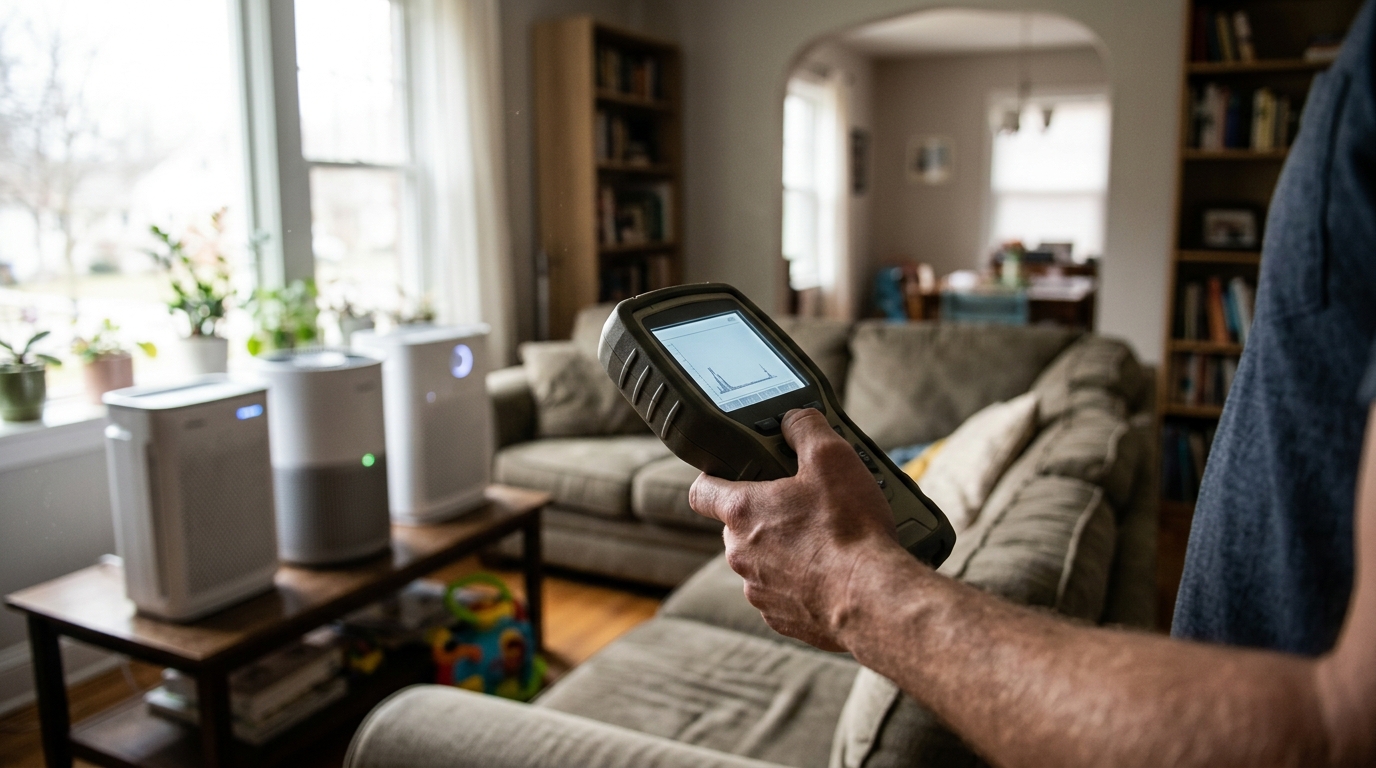
Take an extreme reading seriously
You do not need to identify the measurement before leaving a space that feels unsafe. If a carbon monoxide alarm sounds, or you suspect exhaust from a fuel-burning appliance, get everyone outside immediately and call emergency services from outdoors. If you feel dizzy, confused, or otherwise unwell, seek medical help rather than staying inside to test the monitor.

Featured in this guide
Breathe Better Indoors, Live Better: A Practical Guide to Improving Indoor Air Quality
Respond to the likely source
For smoke or particle pollution, move away from the source and avoid drawing in outdoor air if conditions outside are worse. Once you are safe, an appropriately sized air cleaner may help with particles, but it does not replace removing the source. If the number is a carbon dioxide reading, leave a crowded or poorly ventilated room and improve ventilation when it is safe to do so.
Verify the reading from a safe place
Check the device or app for its units, measurement range, and any alarm message; a number without that context cannot tell you exactly what exposure you face. Then follow the manufacturer’s instructions for sensor placement, maintenance, and any required calibration. An error is possible, but our team would not dismiss an extreme reading that appears alongside symptoms, visible smoke, an alarm, or a known pollution source.
Make an everyday indoor air plan
After an immediate concern is resolved, we suggest looking room by room at sources such as cooking fumes, smoke, and poorly vented appliances. Our Breathe Better Indoors, Live Better: A Practical Guide to Improving Indoor Air Quality can help you organize those everyday steps. Routine improvements are worthwhile, but they should never delay leaving a suspected immediate hazard.
Check the product’s listed specifications when evaluating make an everyday indoor air plan.
How to use the restraint
1
Choose the restraint size for the dog and vehicle position
2
Attach the restraint to the approved vehicle anchor point
3
Check the restraint tension before the vehicle moves
4
Introduce the dog to the restraint during the 000 reading check
See if Breathe Better Indoors, Live Better: A Practical Guide to Improving Indoor Air Quality fits your setup








Leave a comment